Posted by Katarina Fajfar
on March 18, 2025
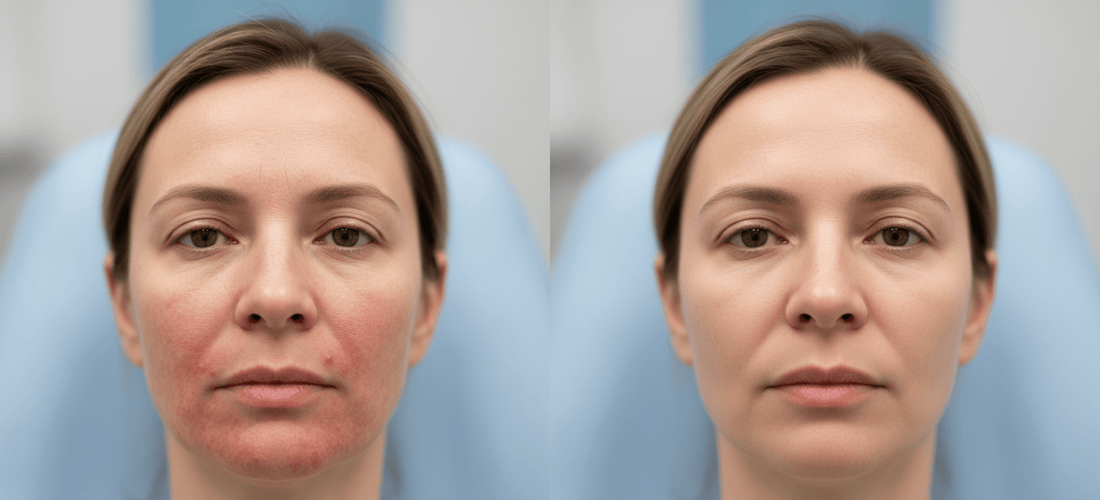
Perioral dermatitis is a persistent inflammatory rash that usually appears as red, flaky skin and small pimples around the mouth. It is often seen in younger women, but it can affect people of all ages and genders. If you have a red rash around your lips that won't go away, it may not just be sensitive skin or acne, but a condition called perioral dermatitis. In this article, we'll explain what perioral dermatitis is, how to recognize it, what causes it, and how it's treated. We'll also provide skin care tips for this condition, and answer frequently asked questions about managing perioral dermatitis.
What is perioral dermatitis?
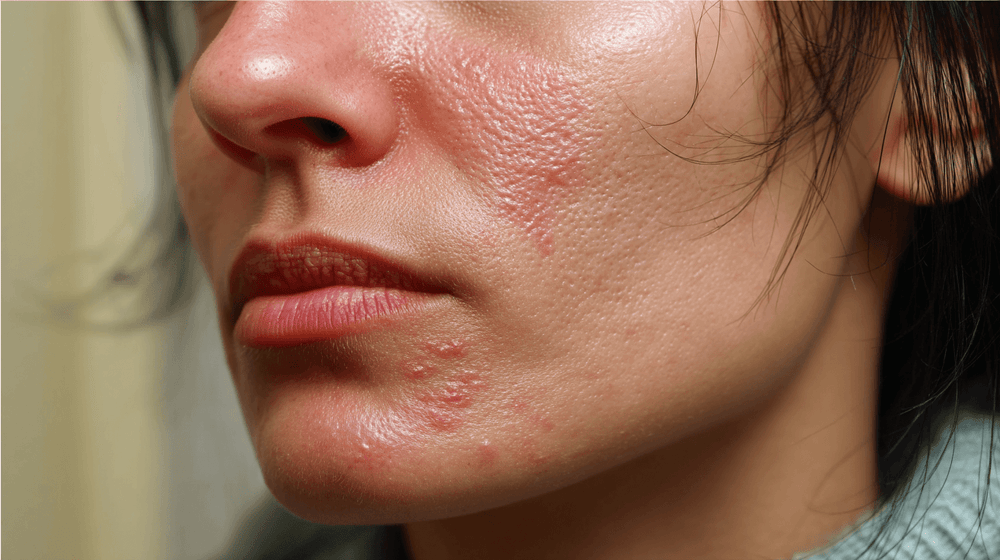
Perioral dermatitis is an inflammatory skin disorder that, as the name suggests, occurs around the mouth (the Latin word peri means around, and oral means oral). It is a form of dermatitis that causes a red rash and pimples in the nasolabial folds, around the lips, and on the chin . Sometimes the rash can also spread towards the nose or around the eyes (in which case it is called periorific dermatitis, as it covers the area around the openings on the face). The skin in the affected area is usually red, may peel, and small reddish bumps (papules) or pus-filled pimples (pustules) form on it. Typically, the rash in perioral dermatitis does not reach all the way to the edge of the lips, often a narrow strip of skin around the reddened lip itself remains unchanged.
Although perioral dermatitis may resemble acne or rosacea, it is a separate condition. The skin can be irritated, sensitive, and often itchy or burning , causing significant discomfort. The condition itself is not a health hazard, but it can affect a person's self-esteem , as it is a noticeable rash on the face that is difficult to cover up with makeup.
Signs and symptoms of perioral dermatitis
Perioral dermatitis is recognized by fairly characteristic signs on the skin of the face. Key symptoms and signs include:
- Red rash around the mouth: The skin appears red and inflamed, especially around the mouth, and may also appear under the nostrils and on the chin. The skin may be slightly swollen and warm to the touch.
- Small pimples and pustules: Tiny papules (red bumps) and pustules (pimples with white or yellowish contents) appear on a reddened surface. These rashes usually occur in clusters or clusters . In more severe cases, small fluid-filled blisters may also form.
- Scaling and dry skin: The affected skin may peel and become dry. It is common to see tiny scales or peeling skin on the surface of the rash.
- Itching or burning: Many people experience itching or burning in the affected area. For some, the itching is mild, for others it is more severe; sometimes the skin also stings, especially when applying irritating creams or cosmetics.
- Spread of the rash: The rash is primarily confined to the area around the mouth. However, it can spread towards the nose or around the eyes (e.g. in the area under the eyes or on the eyelids). Very rarely, similar rashes appear elsewhere (cases have been reported on the chin, forehead or even the genitals), but this is the exception. In most cases, it remains confined to the area of the face around the mouth.

Symptoms of perioral dermatitis usually develop gradually. At first, you may notice only slight redness or a few small pimples around your mouth that look like mild acne. Over time, especially if you continue to be exposed to triggers (such as using steroid creams or irritating cosmetics), the rash can worsen and spread. When perioral dermatitis breaks out in full, it is characterized by a red “ring” area of rash around your mouth, dotted with small, inflamed bumps.
It's important to note that perioral dermatitis is not contagious . Although the skin may look inflamed and infected, it is not a bacterial or fungal infection that can be transmitted to other people. It is an inflammatory skin reaction that can be related to a variety of factors, but you cannot directly pass it on to someone else through contact.
Who is most commonly affected?
Perioral dermatitis can occur in anyone, but statistics and clinical experience show that there are some specific groups in which this problem is more common:
- Gender: It occurs by far most often in women . Women of all ages can be affected, but it is most common in young and middle-aged women. Men are less likely to get the disease, with an estimated 10% of all cases occurring in the male population.
- Age: The typical age group is adults between the ages of about 20 and 45. Many cases first appear in their 20s or 30s. Of course, this is not the rule, perioral dermatitis can also affect younger teenagers or older adults. It is rarer in children, but it can occur (in particular, there is a special form, called granulomatous perioral dermatitis in children, in which the bumps are more yellowish-brown in color).
- Skin type and medical history: People with sensitive skin or a tendency to eczema (atopic dermatitis) may develop this problem more quickly, as their skin barrier is already somewhat weakened. Those with rosacea (chronic redness and pimples on the face) are also more prone, and sometimes perioral dermatitis occurs in addition to rosacea, or the two conditions alternate.
- Steroid and cosmetic use: People who frequently use topical corticosteroid creams (to treat other skin rashes or allergies on the face) are at risk. Also at risk are those who use heavy moisturizers, oily cosmetics, or heavy makeup on their faces. We explain more about how these factors play a role in the next section on causes.
In short, perioral dermatitis is most commonly seen in younger women with sensitive skin or a history of steroid cream use, but it can affect anyone. Although men and children are not excluded, it occurs less frequently in them. What all groups have in common is that the skin around the mouth is very sensitive and can react violently to certain stimuli, which manifests as this form of dermatitis.
Causes and triggers of perioral dermatitis
The exact cause of perioral dermatitis is not fully understood. Dermatologists believe that it is not a single thing, but a combination of factors that disrupt the skin's balance and cause inflammation. Perioral dermatitis is therefore often described as a skin reaction to certain triggers. Here are the most common known triggers and circumstances associated with perioral dermatitis:
- Corticosteroid creams and sprays: One of the main culprits is the use of topical corticosteroids on the face. Many people get steroid (corticosteroid) cream for eczema, allergies or other rashes, and if they apply it to the face (especially around the mouth and nose), it can trigger perioral dermatitis after a while. Paradoxically, steroid creams initially improve the rash greatly, the redness subsides, and the pimples disappear. However, later, when the cream is stopped, there is a strong rebound in the form of perioral dermatitis. Corticosteroid nasal sprays or asthma inhalers that contain steroids (e.g., to treat allergic rhinitis) can also contribute, as microscopic particles from the spray get on the skin around the nose and mouth and cause inflammation.
- Heavy, greasy creams and cosmetics: The use of certain cosmetics can trigger or worsen this condition. Rich moisturizers, greasy lotions, paraffin or petroleum jelly-based creams, and pore-clogging cosmetics can create an environment on the skin in which perioral dermatitis is more likely to develop. Creams containing mineral oil, petrolatum, paraffin, and isopropyl myristate are particularly problematic because they can disrupt the skin's natural balance if used for long periods of time. Heavy liquid powders, concealers, and makeup can also trap moisture and dirt on the skin, irritating it.
- Fluoride toothpaste and harsh oral hygiene products: A link between perioral dermatitis and the use of fluoridated toothpaste is very often mentioned. Fluoride can irritate the skin around the mouth in sensitive individuals. Some toothpastes with strong flavors or foaming agents (SLS sodium lauryl sulfate) can also be a problem. These can cause irritation of the skin around the lips, especially if the foam gets on the skin while brushing your teeth.
- Excessive cleansing and inadequate care: Paradoxically, excessive hygiene can also be harmful. Washing your face too often with strong cleansing gels, using rough scrubs and toners with alcohol can dry out and weaken the skin barrier. Skin that has lost its protective lipid layer is much more susceptible to inflammation and irritation. Perioral dermatitis can occur in response to such a disrupted skin balance.
- Environmental factors: External factors can worsen the condition or trigger a flare-up in people who are prone to perioral dermatitis. These include UV light (sun exposure), heat, humidity, and wind and cold . For example, rapid temperature changes (from cold to warm), saunas, or sun exposure can trigger redness and a rash around the mouth in some people. These factors themselves may not be the underlying cause, but they can worsen existing dermatitis .
- Hormonal changes: Perioral dermatitis has been observed to worsen in some women during hormonal fluctuations , such as before menstruation or during pregnancy. Use of oral contraceptives (birth control pills) may coincide with dermatitis flare-ups in some women, suggesting a possible hormonal component in triggering the inflammation.
- Microorganisms on the skin: Because perioral dermatitis is an inflammation, scientists have studied whether microbes can also cause it. Skin biopsies in some patients have found an increased presence of Candida albicans (yeast) or certain bacteria (e.g., species of the genus Fusiform have been mentioned as possible causes). The role of skin mites, such as Demodex mites , which live in hair follicles, has also been mentioned. However, there is no solid evidence for any of these possibilities, so they are considered more of a theory . (Unlike bacterial acne, perioral dermatitis is not a classic infection, although the presence of certain microbes can further irritate the skin.)
- Weakened skin barrier and immune response: People with pre-existing skin sensitivities (e.g. atopic dermatitis) have impaired skin barrier function . The skin's protective layer is more easily permeable to irritants and microorganisms, which can trigger inflammation. Stress can also play a role - stress hormones affect the immune system and skin, so it is not uncommon for perioral dermatitis to appear or worsen during periods of increased stress.
In short: Perioral dermatitis is caused by a combination of factors that irritate the skin around your mouth and disrupt its natural balance. Topical steroids and inappropriate cosmetics are the biggest culprits, but fluoride, hormones, the environment, and overall skin health can also play a role. It's important to identify what triggers your flare-ups so you can avoid them and reduce the likelihood of recurrence.
Treatment of perioral dermatitis
Treatment for perioral dermatitis usually involves two steps: first, removing or discontinuing anything that is likely to trigger or worsen the dermatitis, and then treating the skin inflammation with medication or appropriate care. Since improper treatment can worsen the condition, it is important to know the right steps to take. Below are the key principles and treatment options:
1. Immediate cessation of triggers (so-called “zero therapy”):
The first and most important step is to stop using all corticosteroids in the affected area. If you have been using a steroid cream (even a mild hydrocortisone ointment), you should gradually taper off of it or discontinue it immediately as directed by your doctor. The same goes for steroid nasal sprays; talk to your doctor about alternatives. In addition to steroids, you should temporarily stop using cosmetics around your mouth. This means no makeup, no strong creams, serums, cleansers, or scrubs in that area, at least until the condition has subsided. Dermatologists also call this zero therapy , which means giving your skin a break from all potential irritants. During this time, wash your face only with lukewarm water or a gentle cleanser; do not rub your skin. You can use a clean, soft cloth soaked in warm water to gently clean the area around your mouth.
Note: When you stop using a steroid cream, expect your dermatitis to initially get worse . This is an expected rebound effect : the steroid has suppressed the inflammation, and when it is stopped, the redness and rash may return even more strongly. This worsening usually lasts a few days to a couple of weeks, then it starts to improve. It is important to persevere and not resort to steroids again because of this worsening; if you hold out through this phase, your skin will recover more quickly.
2. Local treatment with medications (creams, gels, lotions):
Once the main triggers are removed, doctors will introduce topical medications to treat the inflammation. Because perioral dermatitis is somewhat similar in appearance and causes to acne and rosacea, the medications are also similar:
- Antibiotic ointments: Metronidazole cream or gel is very often prescribed (this medication works against certain bacteria and parasites and is anti-inflammatory; well-known products include Rozamet or Rozex). Erythromycin gels or clindamycin lotions are also used, both of which are antibiotics that reduce inflammation and the number of bacteria on the skin.
- Azelaic acid: Azelaic acid cream or gel (such as Skinoren) is often prescribed because it has anti-inflammatory, antibacterial, and helps exfoliate dead skin cells. Azelaic acid is safe for long-term use and can be effective in controlling redness and pimples.
- Benzoyl peroxide: This is also an acne treatment. Benzoyl peroxide gel or cream (e.g., in lower concentrations of 2.5-5%) may help reduce the number of pimples in some people by killing bacteria and drying out inflamed lesions. Use with caution as it can be mildly irritating and bleaching.
- Non-steroidal anti-inflammatory creams: If dermatitis is very persistent, a dermatologist may prescribe pimecrolimus cream (known as Elidel) or tacrolimus ointment (Protopic). These are medications that work on the skin's immune response and reduce inflammation without being steroids. They are used primarily when other treatments have not helped or when the doctor wants to avoid long-term use of antibiotics.
- Sulfur preparations: Sulfur has a mild antibacterial and keratolytic effect. There are creams or cleansing foams containing sulfur that can help speed up the healing of the rash. Sometimes it is recommended to wash the face with a gentle sulfur soap or apply a cream containing sulfur to the affected areas at night.
Topical treatment takes a few weeks (usually at least 6-8 weeks) . Patience is key, improvement does not occur overnight. It is important to apply the medicated cream regularly as directed (e.g. metronidazole twice a day, azelaic acid as well). Once the condition improves, your doctor may advise you to continue the treatment for a while to prevent recurrence.
3. Systemic treatment (oral antibiotics):
If perioral dermatitis is widespread or does not respond well to creams, oral treatment may be prescribed. These are usually not classic “antibiotics for infection”, but low-dose antibiotics that work against inflammation. The most commonly prescribed oral antibiotics for this condition are:
- Tetracyclines: e.g. tetracycline or more commonly doxycycline or minocycline . These antibiotics, in small doses, have an anti-inflammatory effect and inhibit certain bacteria on the skin. Pregnant or breastfeeding women and children should not take tetracyclines, for which the following applies:
- Macrolide antibiotics: e.g. erythromycin in tablet form. This is often the choice for younger patients or pregnant women where tetracycline is not suitable.
- Second: in very stubborn cases, a dermatologist sometimes prescribes low doses of isotretinoin (this is a drug used for severe acne; in small doses it can also help with resistant forms of perioral dermatitis, but this should only be considered under the strict supervision of a specialist).
Oral (systemic) treatment can last 4-6 weeks or more , depending on the response. Patients often notice improvement after about 2-3 weeks of taking the tablets, but complete disappearance may take a month or two. Here too, the medication must be taken until the end of the prescribed course, even if the skin improves earlier, as stopping may risk a relapse.
4. Steroid tapering and special cases:
As mentioned above, stopping steroid creams can be difficult due to the rebound effect. Some dermatologists therefore advise a gradual regimen in very severe cases: for example, if the patient was using a strong steroid every day, switching to a weaker steroid or reducing the use (every other day, then every third day, etc.) before stopping completely. This must be supervised by a doctor. Sometimes it even happens that if no therapy works and the rash is very severe, the doctor reintroduces a mild corticosteroid for a short time and then does gradually stop it, but this is a last resort when other methods have not worked, and always with the parallel introduction of other medications that will take control when the steroid is stopped. Keep in mind that steroids should never be used around the mouth for a long time , as it will only worsen the problem (in addition, steroids, when used for a long time, thin the skin, cause visible veins, stretch marks and other undesirable effects).
5. Treatment time and prognosis:
Perioral dermatitis requires patience . Even with appropriate treatment, the rash usually does not disappear immediately; first, the spread stops, the redness slowly fades, and the pimples dry up. The skin usually heals completely within a few weeks to two months, or faster in milder cases. It is important to continue the prescribed therapy for as long as prescribed. Once the skin returns to normal, you can gradually return to gentle care and (after consulting your doctor) to the use of mild cosmetics. However, be careful: since it is a chronic condition, perioral dermatitis can recur over time, over a few months or years. In the event of a recurrence, a similar treatment is usually used that has helped previously. The good news is that once you know how your skin reacts, you can quickly recognize the onset of an outbreak and take action (remove triggers, use a healing cream) and thus prevent a more severe outbreak.
Good cooperation with a dermatologist is key to successful treatment. If you notice a rash around your mouth and are unsure whether it is perioral dermatitis, it is recommended to see a doctor for a proper diagnosis. Your doctor will also assess whether it may be due to another similar condition (e.g. acne, rosacea, seborrheic dermatitis or contact allergy) and adjust your treatment accordingly.
Skin care and tips for perioral dermatitis
Medications and dermatological therapy will do their job, but proper skin care is also extremely important. Proper care can alleviate symptoms, speed up healing, and prevent further skin irritation. Here are some practical tips on how to manage your skin when you're dealing with perioral dermatitis, and how to care for your face to reduce the likelihood of new outbreaks:
- Minimalism in care: As we mentioned in the “zero therapy”, keep your routine as simple as possible. This means: do not use makeup , serums, toners with alcohol or fragrances, and other unnecessary products for a while. Clean the skin around your mouth only with lukewarm water or a mild cleanser without soap and fragrances (syndets or cleansing milks for sensitive skin are ideal). After cleansing, do not rub your skin with a towel, but rather gently pat it dry.
- Cold compresses to soothe: If your skin is very inflamed, red, and burning, you can use cold compresses . Take a sterile gauze pad or a soft, clean cloth, soak it in saline solution (or boiled and cooled water), and place it on the affected area for about 10-15 minutes . Do this compress twice a day . Cold compresses will relieve inflammation, reduce the burning sensation, and slightly reduce redness. Some people also use compresses made from chamomile (chilled chamomile tea) or black tea , which has an astringent effect, but make sure you are not allergic to chamomile.
-
Gentle moisturizer and skin protection: Although we advise against heavy creams, the skin still needs moisture and protection , especially when it starts to peel. It is recommended to choose a light, non-greasy and neutral cream that does not contain aggressive ingredients. Our recommendations from the SkinFairytale line for perioral dermatitis care are:
- Apply zinc ointment to affected areas during a breakout: Zinc Balm is a natural balm with zinc oxide that soothes irritated skin and creates a protective layer on inflamed areas. Zinc oxide is known to reduce redness, slightly dry out pimples, and speed up the healing of skin lesions. Apply a thin layer directly to red areas and pimples around the mouth.
- Instead of heavy creams, use a nourishing balm: Atopic Balm is our rich balm, specially formulated for sensitive and dry skin. It contains no synthetic fragrances or irritating chemicals. After the initial acute phase (when breakouts are at their worst), you can gently rub it into the affected areas in a thin layer . The balm will help restore the skin barrier , reduce the feeling of tightness, and prevent excessive dryness without clogging pores.
- For daily skin hydration: Once the worst of the rash has subsided, it’s important to keep your skin hydrated and supple so it can fully recover. Atopic Cream is a lightweight moisturizer from our range that you can use twice a day on the area around your mouth (and of course on the rest of your face). Formulated for atopic and sensitive skin, it’s free of mineral oils or parabens and absorbs quickly. It will keep your skin soft, reduce flaking and support epidermal regeneration.
- Gentle cleansing without irritation: While you have perioral dermatitis (and afterwards), avoid harsh soaps or cleansing gels that dry out your skin. We recommend using mild cleansers that respect your skin’s natural pH. From the SkinFairytale line , Cleansing Balm and Cleansing Gel are great choices. Cleansing Balm is an oil-based balm that transforms into a milky emulsion upon contact with water and gently removes impurities and makeup without disrupting the skin’s barrier . Cleansing Gel provides the second stage of cleansing, thoroughly but gently removing residue and keeping your skin soft and balanced . When washing your face with these products (or similar gentle cleansers), make sure the water is not too hot; lukewarm water is best, as hot water can reactivate redness.
- Avoiding known irritants: Until your skin has calmed down (and possibly even later), avoid products that may irritate . This means: no alcohol-based toners, no fragrances on your face, no essential oils directly on your skin, no strong active ingredients (e.g. AHA/BHA acids, retinol) on the area around your mouth while you have a rash. Also, postpone shaving or waxing the area around your mouth if possible, as razors can further irritate the skin.
- Diet and lifestyle: Although scientific studies have not proven that any specific food directly causes perioral dermatitis, some people find that certain things make their skin worse. In general, it is helpful to avoid very spicy foods, alcohol, and hot drinks (coffee, hot chocolate) during a flare-up, as these can temporarily dilate blood vessels and increase redness. Limiting extremely sweet foods may also help if you notice a connection with flare-ups. Stay hydrated (enough water) and eat a balanced diet rich in vitamins and antioxidants that support the skin from the inside. Try to manage stress with appropriate relaxation techniques, as stress, as mentioned, can contribute to worsening skin problems.
- Weather protection: When going outside, protect your face from harsh wind and cold (in winter, you can apply a thin layer of protective cream, such as Atopic Balm, to prevent the wind from drying out your skin). Be careful in the sun, some moderate exposure can be beneficial to the skin, but sunburn or prolonged sun exposure can worsen the inflammation. Use a sunscreen with mineral filters (zinc oxide or titanium dioxide) , which are usually less irritating than chemical filters, if you must go out in the sun. Choose a formula for sensitive skin. Since some sunscreens are oily, test on a small area or wear a hat with a brim to reduce the need for cream on your face during the acute phase.
- Gradually reintroduce products: Once the dermatitis has healed and your skin has been completely normal for a few weeks, you can slowly return to your usual skincare or makeup routine. But do so gradually and with caution . Introduce one product at a time and see if it triggers the redness again. You may find that you need to give up any creams or powders you were previously using if you suspect they contributed to the outbreak. It is often necessary to switch to a fluoride- and SLS-free toothpaste , at least for a while, to prevent the dermatitis from recurring.

In short, the goal of perioral dermatitis care is to soothe and protect the skin. Our philosophy at SkinFairytale is to provide the skin with natural and gentle products that support its own renewal. By following the tips above, you can greatly contribute to faster improvement of the condition and ensure that the skin around the mouth remains healthy even after the dermatitis has cleared up.
Frequently Asked Questions (FAQ)
Q: What exactly is perioral dermatitis and how do I differentiate it from acne or eczema?
A: Perioral dermatitis is an inflammation of the skin around the mouth, which appears as a red rash with small pimples. It differs from acne in that it occurs mainly around the mouth (acne can occur anywhere on the face, including blackheads and larger cysts, which perioral dermatitis does not). It differs from eczema (atopic dermatitis) in appearance, as perioral dermatitis is characterized by bumps and pimples, while eczema is a flatter, dry and itchy rash without pimples. The location is also special: perioral dermatitis is concentrated around the mouth (and can also be on the nose and eyes), while seborrheic dermatitis, for example, appears near the nostrils and on the chin with scales, and rosacea on the cheeks and nose. To definitively differentiate the diagnosis, it is best to visit a dermatologist, who will identify the pattern of the rash through an examination.
Q: Is perioral dermatitis contagious?
A: No, perioral dermatitis is not contagious . It is an inflammatory skin condition that is not caused by traditional germs that are spread through contact. You cannot spread it to other people by kissing, touching, or sharing towels. Therefore, there is no need to isolate yourself, it is only important that you take good care of your skin to help the condition heal.
Q: What causes perioral dermatitis? Did I do something wrong with my care?
A: This condition is most often triggered by external factors . The most common triggers are the use of corticosteroid creams on the face and irritating cosmetics . For example, if you have been using hydrocortisone cream or a stronger steroid on the chin/mouth area for a long time (perhaps for another rash), there is a high probability that this is the main culprit, steroids often trigger perioral dermatitis when discontinued. Improper care can also contribute: the use of very greasy creams, strong soaps, rough scrubs, inappropriate toothpastes (with fluoride and SLS) can eventually lead to this problem. However, do not blame yourself, sometimes perioral dermatitis occurs even in people who have not made any significant changes in their care. Internal factors are also possible, such as hormonal imbalances or reactions to certain microbes on the skin. In short, the cause is often a combination of things. It is important to identify possible triggers in your case (for example: stop taking steroids, change toothpaste, simplify cosmetics) and observe whether the skin improves.
Q: How is perioral dermatitis treated, do I need medication?
A: Treatment is usually a combination of self-care and medical therapy . First, you stop using anything that could trigger the rash (steroids, unsuitable cosmetics). Then, topical treatment often helps: creams with metronidazole, azelaic acid or antibiotic gels prescribed by a doctor can greatly improve the condition within a few weeks. If this is not enough, the dermatologist will add pills, usually low doses of antibiotics (doxycycline, minocycline or erythromycin) for a period of one to three months, depending on the severity. Proper skin care is also key during and after treatment (gentle routine, moisturizing with suitable creams, skin protection). In some mild cases, perioral dermatitis can disappear on its own if we remove the triggers and are patient, but this can take several months. Most people choose treatment because they want to heal their skin faster.
Q: How long does perioral dermatitis take to heal?
A: The duration varies from person to person. When appropriate treatment is introduced (such as a cream with a medicinal ingredient), the first signs of improvement appear after a few weeks, say 2-3 weeks. Most rashes heal within 6 to 8 weeks . In mild cases, they can disappear within a few weeks, but in very persistent cases, treatment can drag on for 3 months or more . If you decide to wait without medication, just by discontinuing cosmetics, it can take several months (in some cases even a year) for the skin to completely calm down. Once healed, perioral dermatitis usually leaves the skin normal, perhaps with a slight pink tint remaining for a while at the rash sites, which eventually disappears. It is important to continue to pay attention to gentle care for a while after it disappears, as returning to old habits too quickly can cause the condition to recur.
Q: Can perioral dermatitis recur once it has been cured?
A: Unfortunately, you can . Perioral dermatitis has many of the characteristics of a chronic skin condition, and the predisposition remains. If you are exposed to the same trigger again later (for example, starting to use steroid cream on your face again or very oily cosmetics), there is a chance that the rash will return. Periods of hormonal changes or stress in the future can also lead to a relapse. The good news is that many people who change their skin care habits and are aware of their triggers can stay free of relapses for a very long time. And even if it does happen again, you already know what to do, and usually the same cream or antibiotic that helped the first time is used, and the condition is brought under control more quickly. Some individuals who have frequent relapses have a maintenance therapy agreed with their dermatologist (for example, applying azelaic acid a few times a week even when there is no rash, as a preventative measure).
Q: Can I use makeup while I have perioral dermatitis?
A: It is recommended to avoid wearing makeup on the affected area during an acute flare-up. Foundations, powders, and concealers can further clog the skin and slow down healing. In addition, applying and removing makeup on irritated skin can increase redness and itching. Try to give your skin a break from makeup at least while the rash is severe. If necessary (e.g. for an event), choose non-comedogenic, hypoallergenic, fragrance-free products , and wear them for as short a time as possible. When you get home, remove makeup very gently (with cleansing milk or oil, without rubbing). Once the condition improves, you can slowly use makeup again, but we still recommend light formulas and be careful to remove cosmetics if you notice a worsening. Lipstick and lip balms are usually not problematic for perioral dermatitis, but they can irritate the skin if they contain strong fragrances or essential oils (e.g. menthol). Therefore, when it comes to lip products, choose as simple and neutral as possible.
Q: Can I apply hydrocortisone (corticosteroid) cream to soothe the rash around my mouth?
A: No, corticosteroid creams (even mild hydrocortisone creams) are not recommended for perioral dermatitis. It is true that steroids reduce inflammation very quickly and at first glance the redness may subside. However, using steroids in this area triggers a vicious cycle: temporary improvement will be followed by a sharp deterioration when you stop using the steroid. Steroids are one of the main causes of perioral dermatitis in the first place, so they should not be used to treat it, which would be like "putting out a fire with gasoline". If you have very severe inflammation, you should visit a doctor to prescribe appropriate therapy (antibiotic or non-steroidal anti-inflammatory cream). The only exception when a doctor can use steroids for this disease is a special strategy of gradual withdrawal, but this takes place exclusively under medical supervision. So never try to use corticosteroids on yourself, as in the long run you will worsen the condition and complicate the treatment.
Q: How should I care for my skin once perioral dermatitis has cleared up to prevent recurrence?
A: Once the rash has healed, you naturally want to keep your skin healthy. We recommend that you continue to follow some gentle skin care principles:
- Continue to use mild cleansers and avoid harsh soaps or scrubs around the mouth area.
- Keep your skin moisturized with a light, non-comedogenic moisturizer (e.g. SkinFairytale Atopic Cream or a similar cream for sensitive skin). Hydration helps strengthen the skin barrier.
- Be careful with new cosmetics, introduce them one at a time, and choose products for sensitive skin , without unnecessary irritants. You may want to opt for mineral powder instead of liquid if you find that liquid makeup doesn't suit you.
- Always be careful with corticosteroids on your face. For example, if you have an eczema flare-up on your face, talk to your doctor about the shortest possible duration of use and stop immediately at the first sign of perioral dermatitis.
- A fluoride- and SLS-free toothpaste is a good choice for the long term if you have had this problem. There are several brands on the market that offer such toothpastes (often in pharmacies or health food stores). The mouthwash should also be alcohol-free so as not to irritate the skin around the mouth.
- On windy and cold days, apply a thin layer of protective balm around your mouth (you can use Atopic Balm ) to prevent the skin from drying out and cracking.
- If you notice any suspicious burning sensation or redness that resembles the onset of perioral dermatitis, immediately switch to a “minimalist” care regimen and remove any new product you have introduced, as this may prevent the inflammation from flaring up again.
By following these guidelines, you can greatly reduce the chance of this unpleasant problem recurring. Your skin around your mouth will remain in good condition, and you will be more worry-free about your daily care.
Q: When should I seek medical attention for perioral dermatitis?
A: It is recommended to see a dermatologist or your doctor if you suspect you have perioral dermatitis, especially if:
- the rash gets worse quickly or is very extensive,
- home measures (stopping cosmetics, cold compresses, gentle care) do not improve the condition within a few weeks,
- The rash has a major impact on your self-confidence and well-being, and you want a solution as quickly as possible.
- you are not sure if it might be something else (e.g. if there is also a rash around the eyes, a medical evaluation may help).
A dermatologist will confirm the diagnosis and prescribe appropriate medication. It is also important to see a doctor if you have tried treatment and it has not worked after a few months, as it may be necessary to adjust your therapy. With professional help, you will get rid of perioral dermatitis faster and more effectively.