


Posted by Andraz Radovan
on September 09, 2025
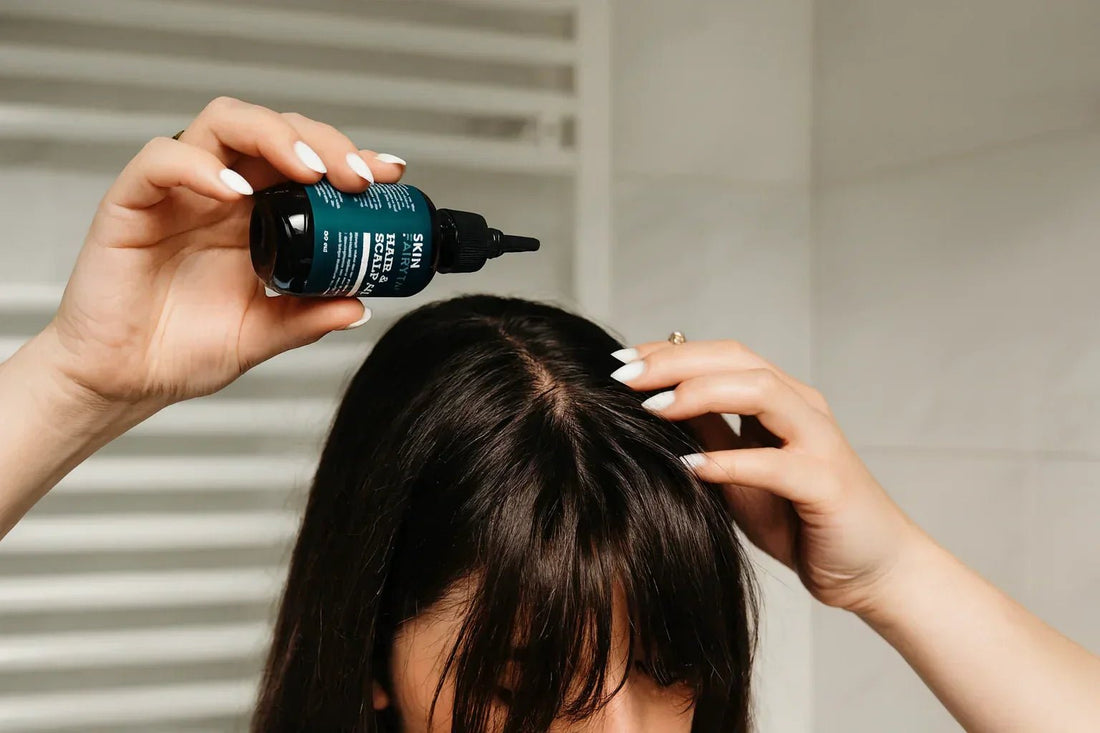
In this guide, you'll learn why the scalp is the foundation of beautiful hair, how to recognize signs of imbalance, and how to use a simple routine (cleansing, moisturizing, massaging, oiling) to ensure healthy scalp and faster growth, greater density, and shinier hair.
Healthy, beautiful hair starts with a healthy scalp. If we want strong, thick, and shiny hair, we need to take care of the skin underneath first. In this guide, you'll learn why scalp care is crucial and how to improve the condition of your scalp with the right routine, from washing your hair properly to massaging it with rosemary oil, for beautiful hair.
When it comes to hair care, we often focus on the lengths and ends, but the real starting point for beautiful hair is the scalp. The scalp is a living skin, dotted with hair follicles, from which our hair grows. Just like the skin on our face, the scalp can be dry, oily, sensitive or irritated. If something is out of balance there, for example if the skin is dehydrated, irritated or covered with excess scales, this will quickly show up in the hair. Hair growth slows down, hair becomes thinner, brittle, lifeless or even falls out excessively. A healthy scalp, on the other hand, means better conditions for strong and resilient hair. So let's take care of the foundation first: when the scalp is clean, balanced and cared for, the hair will also grow faster and look more beautiful.
Why is the scalp key to healthy hair?
Think of the scalp as a finger that grows a plant, in our case hair. If the “finger” is bad, the hair will not grow, even if we only nourish the leaves (lengths of the hair). The scalp contains thousands of hair follicles, in which the hair growth processes take place every day. Each follicle needs proper care: enough nutrients and oxygen from the blood, and a clean environment without excess deposits. When the scalp is healthy, it:
- regulates sebum secretion (natural oils), so the skin is neither too dry nor too oily,
- hair follicles are unobstructed , hair can grow out of them unhindered,
- Microcirculation works optimally , which means that blood brings enough oxygen and nutrients to the hair roots.
All of this creates ideal conditions for faster hair growth, greater density and a more beautiful look . It's no surprise that experts warn: hair problems (such as dandruff, damage or excessive breakage) often start right at the scalp. So if we want healthy hair, we also need to take care of the skin from which this hair grows, our scalp.
On the other hand, an unbalanced scalp quickly leads to problems . Clogged hair follicles (due to accumulated sebum, sweat, product residues or dandruff) literally suffocate the hair roots. As a result, hair grows thinner and weaker, can fall out prematurely or its growth stops. The same applies if the scalp is chronically dry and irritated: inflammatory processes can hinder normal hair growth. In short, only a healthy scalp can healthy hair thrive. This is the main reason why we should pay at least as much attention to scalp care as we do to the hair fibers themselves, if not more.
Signs of an unhealthy scalp (and how to recognize them)
How do we know that our scalp needs help? Here are some of the most common signs that everything is not as it should be with our scalp:
- Itching and redness: If your scalp often itches, burns, or you notice red, irritated areas, this is a sign of inflammation or skin irritation. It can be caused by an excessively dry scalp, residue from harsh products, or even an allergic reaction. An itchy scalp often forces you to scratch, which makes the condition worse, and can lead to small sores and additional inflammation.
- Dandruff or flaking: White or yellowish flakes falling from the hair are a classic sign of dandruff or flaking of the scalp. It can be dry, fine flakes (dry scalp) or larger, oily flakes (seborrheic dandruff). Dandruff indicates that the balance on the scalp is disrupted, possibly due to yeast overgrowth, stress, inappropriate cosmetics, or other factors.
- Excessively oily hair: The opposite problem of dryness is an excessively oily scalp. If your hair sticks to your head a day or two after washing, and your scalp is oily, your sebaceous glands are probably working too fast. The cause can be hormonal changes, inappropriate shampoos (too aggressively removing oil triggers a rebound effect), and often also excessively hot water or hot blow-drying.
- Poor hair growth and thinning: You have noticed that your hair is getting thinner, there are fewer strands in the hair, and there is also a lack of volume. The growth of new hair is slowed down. This is often due to long-term neglect of the scalp. The accumulation of plaque can suffocate the hair follicles and they go into “dormant” mode. Chronic inflammation (e.g. due to seborrhea or psoriasis) can also contribute to faster hair loss.
- Feeling tight or sore: Sometimes the scalp literally hurts to the touch or feels tight. This is usually a sign of severe dryness and inflammation of the scalp. It can be caused, for example, by a severe sunburn on the scalp or an extremely dry, atopic skin condition.

Do you recognize any of these symptoms in yourself? Don't worry, there's a lot you can do with proper home care in time. Below, we'll discuss best practices for scalp care and recommend solutions to restore balance. However, when the problems are very severe (e.g. painful sores, severe flaking and redness, or severe hair loss in circles), it makes sense to visit a dermatologist for professional advice.
Scalp care: 4 steps to balance and health
The good news is that scalp care doesn't have to be complicated . The key is consistency and adapting to your scalp's needs. Here are four basic steps to help restore cleanliness, moisture, and health to your scalp, and you'll see improvements in your hair as a result.
1. Gentle but thorough scalp cleansing
The first step to a healthy scalp is washing your hair properly. Many people wash their hair routinely without really cleansing their scalp. It is important that the shampoo really reaches the skin during washing and removes impurities from it. At the same time, the shampoo must be gentle enough not to disrupt the natural balance . Aggressive shampoos with sulfates can remove too many protective oils, leading to dryness or a reactive response of the glands (excessive oiliness).
How to wash your scalp properly? First, wet your hair thoroughly with lukewarm (not hot!) water. Apply a small amount of shampoo, if it is of good quality, a hazelnut-sized amount will be sufficient. Rub it between your palms first, then gently massage your scalp with your fingertips . Do not rub too roughly with your nails, but rather focus on circular movements over the entire surface of your head. This will not only clean your hair, but also stimulate blood circulation. Rinse the shampoo thoroughly so that there is no residue left on your scalp (this can cause irritation or make your hair greasy faster). Repeat again if necessary. Finish by rinsing with cooler water, which soothes the skin and closes the hair pores.
Choosing the right shampoo: For sensitive or problematic scalps, choose a mild, pH-neutral shampoo that is free of sulfates and silicones . These unnecessary additives can irritate the skin or clog the scalp. For example , SkinFairytale Shampoo is specially formulated to gently cleanse without drying out, making it suitable for those who struggle with dermatitis or easily irritated scalps. It contains mild cleansers and conditioning ingredients that cleanse without stripping the skin's natural barrier. After washing with a good shampoo, your scalp should feel fresh, without feeling tight or itchy, and your hair should feel light and not weighed down.
2. Removing deposits with a scrub or mask
Even with the most diligent washing, your scalp can eventually build up deposits that shampoo doesn't completely remove. These include styling product residue, dead skin cells, sebum, and mineral deposits from hard water. These form a film that coats your hair follicles and the surface of your skin. The result? Your scalp has trouble breathing, your follicles can become clogged, and your hair loses volume at the roots.
The solution is to do a deep cleansing every now and then , just like you would exfoliate your face, you can exfoliate your scalp. There’s no need to scrub with harsh salt scrubs (they can irritate your skin). Instead, opt for gentle enzyme or clay masks that bind to impurities. SkinFairytale Pre-Wash Mask , for example, is designed for this step. It’s a mask that you apply to your dry scalp before washing . It contains clay and natural extracts that absorb excess oil, soften dead cells and impurities. After 10-15 minutes, rinse the mask off and then wash your hair as usual.
The effect of a peeling mask: After such a mask, the scalp will literally breathe. Fine scales and product build-up are removed, the skin is cleaner and more receptive to further care (serums, tonics). The hair will also be looser at the roots, as there is no longer a layer to suffocate it at the scalp. If you don't have a special mask, you can occasionally (e.g. once every 2 weeks) use a trick: before shampooing, massage a mixture of one egg yolk and a tablespoon of honey or yogurt into your scalp. Leave for 10 minutes, rinse and wash, the natural enzymes will help remove impurities.
It is important not to exfoliate too often to avoid over -exfoliating your skin. Once a week or every other week is sufficient for most scalp types. Regular, gentle cleansing and occasional deep conditioning will ensure that your scalp is always clean and your pores are open for new hair growth.
3. Moisturize and soothe irritated scalp
Just like your face needs toner and cream, your scalp needs hydration and soothing . Especially if you struggle with a dry, itchy scalp or conditions like seborrheic dermatitis or atopy, moisturizing is key. Balanced skin moisture relieves tightness and itching and strengthens the skin's barrier function (less inflammation, less dandruff).
How to achieve this? After washing (or in between, on a dry scalp), you can apply a moisturizing serum or toner intended for the scalp. Such products are light, non-greasy, so as not to make the hair greasy, but still full of active ingredients for hydration. SkinFairytale Hydro Serum is an example of an intensive moisturizing serum for the scalp , which was developed specifically for problems such as dryness, flaking and itchy scalp. It is based on neroli hydrolate (orange blossom), which refreshes and tones the skin. It also contains aloe vera, honey, panthenol and niacinamide , a combination that acts as a “glass of water” for a parched scalp. Honey and aloe vera bind moisture and have a mild antimicrobial effect (useful for dandruff), while panthenol and niacinamide soothe redness and promote the restoration of the skin barrier.
Hydro Serum is very easy to use: after washing your hair, lightly towel dry it, then apply a few drops of serum directly to your scalp using a dropper, in areas where you feel dryness or itching. Gently massage in. There is no need to rinse the serum out . It is extremely light and will not make your hair greasy, even at the roots, so you can use it on freshly washed hair without worrying about the appearance. When it dries, your hair remains airy and your scalp is soothed and moisturized. Those with very dry hair ends can also mix Hydro Serum into their hair mask or conditioner, but you can use it on the scalp itself, as it does not contain oils and will not weigh down your hair.
Regularly hydrating your scalp will quickly show results: no more uncomfortable tightness, less scratching (which only makes the condition worse) and consequently less flaking. Your skin will be softer and more supple. In addition to using serums, make sure you drink enough water , as hydration from within affects your entire skin, including your scalp. In the winter months, when the air dries out your skin, you can also install a humidifier in your room to prevent dehydration of your skin all over your body.
4. Scalp massage to stimulate blood circulation
One of the simplest (and most enjoyable) steps in scalp care is massage . Regular scalp massage does more good than you might think. By using circular movements of your fingers (or a soft massage tool), you stimulate blood circulation in the scalp. This means that more blood reaches the hair follicles, and thus more oxygen and nutrients. As a result, the hair growth phase can be extended, hair grows faster, and existing hair is better nourished and stronger. In addition, massage helps to break up the accumulated tension in the scalp; many of us don't even notice how much we tense the muscles on our heads. When we relax them, lymph microcirculation also improves, the scalp "revives" and better absorbs the nourishing ingredients from serums or oils.
How to massage your scalp? Use your fingertips (not your nails!) to massage your scalp in a circular, lightly pressing motion. Start at the forehead along the hairline and work your way back towards the crown, then the nape of your neck. Don't forget the side of your head above your ears. Massage for 3-5 minutes a day, dry or while shampooing in the shower. If you don't have time every day, take a moment at least twice a week to give yourself a thorough massage, perhaps while watching TV or before bed to relax.
For even better results, you can use a dedicated scalp massager . It is a small handheld device with soft silicone “spikes”. For example , the SkinFairytale Scalp Massager is designed to be easily held in the palm of your hand and glided over your scalp. You can use it dry, for example while watching a movie, to get the blood flowing through your scalp. It is even more effective while washing your hair: when you are massaging in shampoo or applying a treatment (serum, oil), massage with the massager. This will evenly distribute the product and relax you at the same time. Many users report that regular use of the massager also reduces headaches and feelings of tension.
Tip: Always massage your scalp gently and with pleasure, it should not hurt. If you have a very oily scalp, it is better to massage before washing (as the stimulation can temporarily accelerate sebum secretion). In any case, massage brings only benefits, it costs nothing, takes only a few minutes, and the results can be wonderful: better well-being, relaxation and, in the long run, stronger hair.
Stimulates hair growth and strengthens roots
Many readers are most interested in: “How can I stimulate my hair growth? Are there any products or procedures that really work?” The answer again starts with the scalp. Once you have made sure that the scalp is clean, moisturized and well-circulated (previous steps), you have already created excellent conditions for hair growth. But sometimes we need an additional boost, especially if we are dealing with thinning hair or excessive hair loss . In those cases, you can reach for specialized serums that target hair follicles and the growth processes within them.
Active hair growth serums
Modern cosmetology has developed scalp serums that contain active ingredients to stimulate growth and stop excessive hair loss. These serums are not medicines, but cosmetic products with concentrated nutrients and stimulants that “awaken” the follicles. They are used preventively or curatively when we notice that we have less and less hair or that it is growing very slowly.
What ingredients help with hair growth? Some of the best known include caffeine, rosemary, biotin, niacinamide, amino acids, peptides and various plant extracts (e.g. pea sprouts, turmeric). Caffeine, for example, has been shown in studies to prolong the anagen (growth) phase of hair and block the effect of the DHT hormone, which causes follicle miniaturization. Biotin (vitamin B7) is essential for the formation of keratin, the protein that makes hair, so a biotin deficiency can cause hair to thin. Niacinamide improves blood circulation and skin health. Some patents, such as AnaGain™ (pea sprout extract) and Capilia Longa™ (curcumin from turmeric cells), have proven to be extremely effective in stimulating new hair. These two innovative ingredients are also included in the SkinFairytale Growth Serum , which has received a lot of enthusiasm.
Growth Serum, scientific support for new hair : It is a scalp serum specially designed for anyone who is experiencing thinning, slow growth or increased hair loss. Its formula combines natural extracts with dermatological science. It contains the aforementioned AnaGain™ (pea sprouts) and Capilia Longa™ (turmeric) , which work synergistically: pea sprouts stimulate specific signaling molecules in the dermal papillae of the follicle to start producing new hair, while turmeric has an anti-inflammatory and regenerative effect on the follicle environment. In addition, there is caffeine, niacinamide, panthenol and biotin , a real cocktail for lush growth. Caffeine invigorates the scalp, niacinamide (B3) strengthens the skin barrier and reduces micro-inflammation, panthenol (B5) improves the elasticity of the scalp and hydrates, and biotin (B7) provides the follicles with the building blocks for keratin.

The most impressive thing about Growth Serum is its proven results . In an independent clinical study, after 3 months of daily use, there was a +52% increase in hair density , and after 6 months , as much as +80% thicker hair (measured with a microcamera on the scalp). Participants also noticed reduced hair loss and the appearance of many new “baby” hairs. It is important to emphasize that this is not an overnight miracle, the serum must be used consistently every day for at least 3 months , optimally half a year or more, to show the full effect. But the results are achievable without aggressive interventions, just with regular home care, which is extremely encouraging for many.
How to use the growth serum? Growth Serum has a dropper for precise application. Every evening (or at least once a day) apply a few drops to problem areas on the scalp , where you notice less hair (e.g. crown, sideburns, hairline). Then gently rub with your fingers or a massager to absorb the serum. Do not rinse, let it work overnight. The serum is non-greasy and dries quickly, so it will not make your pillows or hair greasy. It is very convenient that you can also use it in combination with other products: for example, if you did an oil treatment that day, you can apply Growth Serum the next morning after washing; or vice versa, if you rub Growth Serum in the evening, you can still use a styling mousse the next morning, etc.
Motivation to stick with it: It's understandable to want quick results, but patience is key when it comes to promoting hair growth. Hair grows slowly (about 1 cm per month) and growth cycles last for months. So you may not notice much in the first few weeks. Stick with it for at least 3 months, that's when most users notice the first tangible changes (fewer hairs on the brush, more small new hairs at the parting, a fuller feeling at the roots). After six months, you should be able to clearly see the difference in density. Keeping a record (taking pictures of your scalp at the beginning and after a few months) will help you visualize your progress. Strengthening your hair is a marathon, not a sprint, and with the right steps and products like Growth Serum, the goal is achievable.
Soothing a sensitive, itchy scalp
It's not uncommon for people to complain about an itchy, burning scalp that's driving us crazy. There are many causes of a sensitive scalp: it can be simply dry (perhaps due to frequent use of blow dryers and straighteners, hot water or dry air), it can be reactive to certain ingredients (e.g. perfumes, alcohol, sulfates in shampoos), or it can be a condition such as seborrheic dermatitis, where the balance of microorganisms on the scalp is disrupted. Whatever the cause, the goal of care is the same: to soothe the skin and restore its barrier .
Daily routine for sensitive scalp
-
Gentle cleansing: As mentioned above, swap harsh shampoos for gentle formulas. As little fragrance as possible, no alcohol or harsh detergents. Wash with lukewarm water and never scratch your scalp with your nails while washing, massage instead. If you have a sensitive scalp, you may not need to shampoo every day; try an interval of 2-3 days to let the skin recover in between. If it gets very oily, reach for a gentle shampoo for frequent use.
-
Avoid heat: Hot air from a hair dryer or hot sun in the summer can further aggravate irritation. When drying your hair, use a medium or cool setting, holding the dryer at least 20 cm from your head. If possible, let your hair air dry occasionally. Wear a hat or cap in the sun to prevent sunburn on your scalp (a common cause of later flaking and pain!).
-
Local soothing: Immediately after washing, when the scalp is cleanest, apply a product that is intended to soothe. Here again, Hydro Serum or a similar product with panthenol, allantoin, bisabolol, oats, etc. comes into play. These ingredients (panthenol and allantoin) are known for their exceptional soothing effect, reducing redness, itching and accelerating the healing of micro-damages on the skin. Hydro Serum does not contain any essential oils or irritating substances, so it is safe even if you have ever had a wound from scratching. The feeling after application is refreshing and cooling, and the itching often subsides within a minute or two.
-
Don't scratch! This is easier said than done, we know. But scratching your scalp with your nails starts a vicious cycle. It may temporarily boost blood circulation, but it also damages the epidermis. Bacteria from your nails can get into the tiny scratches and cause a new infection or inflammation. If you're really itchy, you can press on the area with your fingertips and make circular movements (massage instead of scratching) or use a cold compress (e.g. a piece of cloth soaked in cold water) to cool your scalp for a few minutes. The cold reduces the itching sensation. Menthol in a toner can also help (but make sure it's not in an overly aggressive alcohol lotion).
-
Microbiome maintenance: Sometimes an itchy, irritated scalp is a sign that the balance of bacteria and yeast on the skin is disrupted. Probiotic or prebiotic scalp products can help against this, as well as simple tricks: do not overwash (so as not to remove all the natural bacteria), after washing you can rub a little natural apple cider vinegar diluted with water into the scalp (acids balance the pH and inhibit the growth of fungi that cause dandruff). In this regard, SkinFairytale Hydro Serum contains honey and aloe vera, which have mild antimicrobial properties, help keep the reproduction of fungi and bacteria at a healthy level and thus contribute to a better scalp microbiome.
If severe itching or dandruff does not subside within a few weeks despite proper care, consult a dermatologist. He or she may recommend a medicated shampoo or lotion. However, in most cases, regular moisturizing and care with gentle (non-irritant) products will greatly improve the condition. When the scalp is soothed and no longer inflamed, you will also notice that your hair falls out less and is more resilient, as it is no longer “shed” too quickly by a restless, inflamed scalp.
Scalp oiling - an old tradition for new results
There’s been a lot of talk in the hair care world lately about “scalp oiling.” It ’s actually an ancient practice that’s been used for centuries in India and elsewhere, where women are renowned for their lush hair. Now it’s being discovered in the West, and many are wondering: does it really work? What’s the point of applying oil to your scalp?
Scalp oiling involves applying a selected oil or blend of oils directly to the scalp, massaging it in and leaving it on for a certain amount of time (a few hours or overnight) before washing your hair again. The goal is to nourish and protect the scalp and indirectly strengthen the hair from the roots. There are many types of oils, but in the context of hair growth and scalp health, rosemary oil is particularly worth mentioning. This aromatic oil from rosemary leaves is a real star among natural hair helpers. Let's see why:
- Improves blood circulation: Rosemary oil has a slight warming effect on the skin. When massaged, it dilates the capillaries and increases blood flow to the scalp. This provides the hair follicles with more nutrients and oxygen, similar to a massage, but even more intense. A more blood-filled scalp = better conditions for hair growth.
- Anti-inflammatory and antimicrobial properties: Rosemary contains compounds (e.g. rosmarinic acid) with proven anti-inflammatory effects. This means that applying rosemary oil can reduce irritation, redness, and itchiness on the scalp. The oil also has mild antimicrobial properties, which can help with dandruff (which is partly caused by fungi) and keep the microbiome in balance.
- Promotes hair growth: Perhaps most fascinatingly, research suggests that regular use of rosemary oil may be as effective as 2% minoxidil (a pharmaceutical hair growth agent). In one study, after 6 months of using rosemary oil, participants achieved similar increases in hair density as the minoxidil group, while reporting fewer side effects (itching) with rosemary. Of course, rosemary oil is not a “cure” for baldness, but both scientific findings and numerous satisfied users online confirm that it is an excellent natural hair growth booster.
- Prevents dryness and flaking: Oils create a protective film on the skin that prevents moisture from evaporating . This keeps the scalp moisturized for longer. Anyone who struggles with a flaky scalp can attest that a little oil treatment significantly reduces flaking and uncomfortable tightness. In addition, oils are full of fatty acids and vitamins that nourish the skin.
- Increases hair elasticity: When hair roots are strengthened in a nourished scalp, hair fibers also grow healthier. Many oils (e.g. coconut) can even penetrate the hair and reduce breakage. Regular scalp oiling often results in fewer split ends and shinier hair , indirectly because the hair is better “nourished” to begin with.
How to oil your scalp properly? Choose a quality natural oil. It can be pure vegetable oil: coconut oil (great against microbes), almond oil, argan oil, olive oil, or a special blend are popular. If you want to take advantage of the power of rosemary, you can buy a ready-made cosmetic oil with rosemary (some manufacturers offer rosemary macerate in oil or the addition of rosemary essential oil in a base oil). Caution: never apply undiluted rosemary essential oil directly to the skin, as it is too strong, always mix it with a base oil (e.g. 5 drops of essential oil in a tablespoon of jojoba oil).
Procedure: Apply the oil to your dry scalp by combing through all the sections, it is best to divide your hair into sections and drop a few drops on each, then massage in. The scalp should be evenly and lightly oiled (don't drip too much so that it doesn't run off). Then massage for at least 5 minutes so that the oil is really absorbed and the blood circulation gets going. Your hair will naturally be oily, so it's best to oil it before bed or during the day when you're at home. Leave the oil on for at least half an hour, or you can do it all night, even better if you wrap your head in a warm towel, as the heat increases the penetration of the oil. In the morning, wash your hair thoroughly by shampooing twice to remove all traces of oil.
It is recommended to repeat the oiling 1-2 times a week . More often is not necessary, unless you have really dry skin. Some people practice an intensive treatment: oiling before each wash for 1 month in a row, and then maintenance 1× a week. Observe what suits you.
At SkinFairytale, we have incorporated the tradition of oiling into our product Guardian Elixir - a light oil-based elixir that also contains rosemary and hemp extract. If classic oils (e.g. coconut) make your hair too greasy, you can try this modern elixir: it is a light oil that absorbs faster and does not leave a heavy feeling. Guardian Elixir primarily protects hair from heat damage and UV rays, but it also contains natural ingredients (squalane, hemp oil, vitamin E) that benefit the scalp. You can use it as a leave-in treatment on the ends and scalp before drying, the scalp will get a little oil care, and the hair will be protected from heat.

In short, scalp oiling is worth trying if you want to upgrade your routine. It combines a relaxing ritual (a massage with a fragrant oil) with proven benefits for skin and hair health. Many women report that after a few months of oiling, they noticed faster growth, less hair loss, and even new hair appeared in problem areas. This should not lead us to have too high expectations, unfortunately, oil cannot awaken every dormant follicle, especially not if the causes of hair loss are hormonal or genetic. But as a supportive method for an overall better scalp condition, oiling is very valuable.
An example of a perfect routine for a healthy scalp and hair
Now that we've learned about the individual steps of care, what does it look like in practice as a whole? To help you out, we've put together an example of a weekly routine that combines everything we've mentioned. Of course, you can adapt it to your needs and time; you don't have to use all the products, the important principle is: cleansing + moisturizing + stimulation + protection.
Daily care (daily rituals):
- Morning or evening - cleansing: Wash your hair every second or third day with a mild shampoo . If your hair is very oily, you can wash it every day, but always with a gentle, skin-friendly shampoo. When washing, don't forget to gently massage it with your fingers or a massager. On days between washes, you can refresh your scalp with a hydrosol spray (e.g. lavender hydrosol) or simply with a little water to moisturize and soothe the skin.
- After washing - protection and hydration: Apply Hydro Serum to freshly washed scalp for moisture and soothing, especially if you feel dryness. Apply a drop of protective oil or elixir (e.g. the aforementioned Guardian Elixir ) to the lengths of your hair - this will lock in moisture and protect your hair from the heat of the dryer and weather.
- Every night - growth stimulation: Before going to bed, take a few minutes to care for your hair roots. First, apply Growth Serum to dry scalp: use a dropper to distribute a few drops on the top of your head, the sides, the crown - wherever you want to strengthen your hair. Then massage the serum in, either with your fingers or using a massager. Massage until most of the liquid is absorbed. This ritual will stimulate blood circulation just before going to bed (when the body regenerates) and the serum will work on the follicles overnight.
- Combing and airing: Every day (morning or evening), gently comb your hair and scalp with a natural bristle brush or wooden comb. This distributes natural oils from the scalp throughout the hair and gently massages the skin. Avoid tight ponytails and hairstyles overnight - keep your scalp as relaxed as possible. Sleep on a clean, soft pillowcase (silk or satin are ideal) to prevent friction and irritation of the scalp while you sleep.
Weekly care (1x to 2x per week):
- Deep Cleansing: Exfoliate your scalp once a week before washing with a Pre-Wash Mask or a homemade mask. For example, every Sunday night, apply the mask, leave it on for 10 minutes, rinse, and then wash your hair normally. This will be your “detox” ritual for a fresh start to the week.
- Oil treatment: Treat yourself to a scalp oiling treatment about once a week (e.g. every Wednesday). If you use pure vegetable oil (coconut + a few drops of rosemary essential oil, diluted!), apply it in the evening, massage in and leave it until morning. However, if you use a lighter product like Guardian Elixir, you can also apply it an hour or so before washing. Regular weekly oiling will greatly support your Growth Serum and massages in stimulating growth.
- Scalp check: At least once a week, look at your scalp in a mirror in good light. Is there any dandruff? Does the skin look healthy or red? Are there any clogged pores or pimples? This will make it easier to adjust your care as you go. For example, if you see more dandruff, add a drop of tea tree oil to your shampoo; if it's red, more hydration and maybe a break from massage for a day or two.

This routine is just a guideline, listen to your scalp . You may need to oil twice a week, or only every 14 days. You may only need to use Growth Serum every other day if your hair loss is mild. It is important to be consistent : whatever you do, do it regularly, as your scalp remembers the care and gradually improves.
Conclusion: Scalp first, your hair will thank you
When we talk about beautiful hair, we usually think of shine, softness and length of the strands. But the secret to healthy hair lies beneath the surface - in the scalp . When you give your scalp love and care, your hair will definitely repay you. Finally, here are some key points to remember :
- Healthy hair grows from a healthy scalp: no exceptions. An oily, clogged or inflamed scalp cannot produce strong hair. So always start with scalp care, not just the hair itself.
- Cleansing + hydration + stimulation: this is the golden trio of scalp care. Regular cleansing (but not overly aggressive), sufficient moisture and nourishment of the skin, and occasional stimulation with a massage or exfoliation will restore balance.
- The right products make all the difference: invest in a good sulfate-free shampoo, a scalp serum with proven ingredients (e.g. Growth Serum for growth or Hydro Serum for hydration) and, if necessary, a light oil elixir. These target common problems and can significantly speed up results.
- Consistency and patience: Changes to your scalp and new hair growth take time. Don't give up after a week. You can expect visible improvements within a few weeks to a couple of months, depending on the problem. Stick with the routine for at least 3 months, believe me, it will be worth it!
- Listen to your body: if you notice irritation, find out the cause (maybe a product is not working for you). If the condition improves, continue. Every person is different, so tailor your routine to your needs, of course, taking into account proven care principles.
Finally, let's emphasize this: scalp care should not be a stressful obligation, but a relaxing ritual. Take time for yourself, a pleasant massage or a nourishing mask can have an almost meditative effect. This will not only benefit your hair, but also yourself, as you will reduce stress (which is the enemy of healthy hair!).
Your hair is the crown you wear every day, take care of the foundation of this crown . A healthy scalp will ensure that the crown is shiny and strong. Take care of your scalp with the same care as you take care of your facial skin, your hair will be infinitely grateful! 😊
(If you're dealing with more serious hair loss or thinning and are interested in a scientific approach to the solution, also read our in-depth guide “ How to Stop Hair Thinning and Promote Growth ” - learn more about the causes of hair loss and additional steps for thicker hair.)


