


Posted by Katarina Fajfar
on August 06, 2025
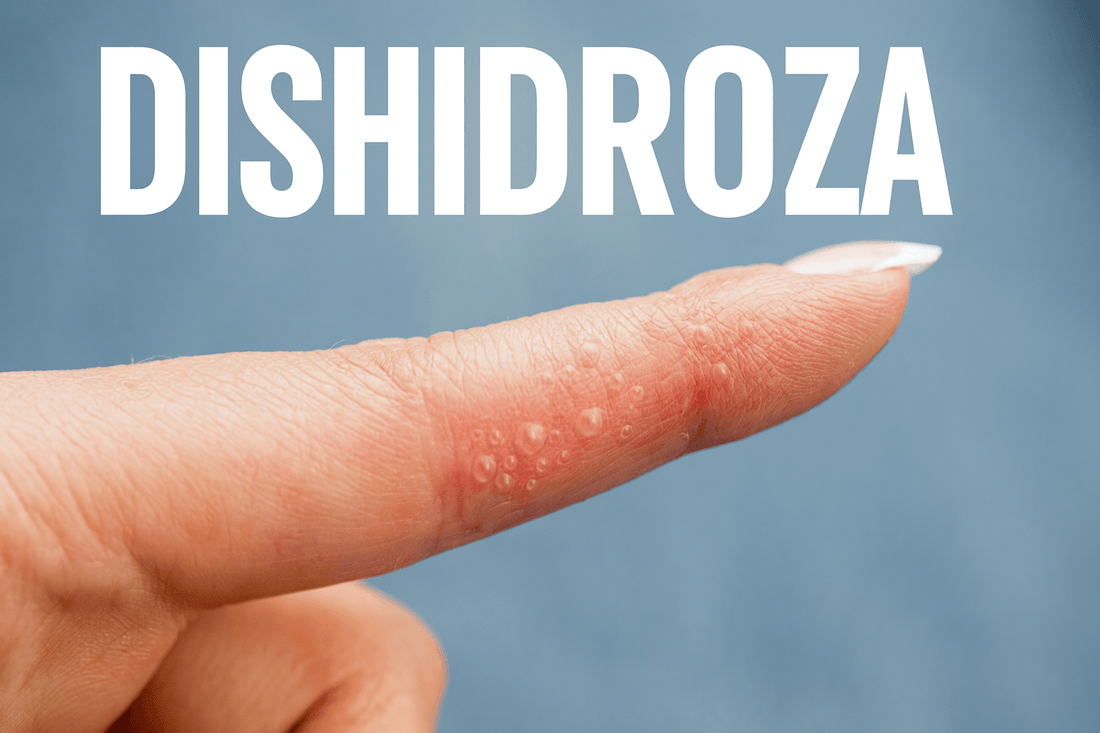
In this article: find key information about dyshidrosis, symptoms, treatment, and supportive skin care. Click on the chapter that interests you.
Table of contents: Dyshidrosis and key information
Quick overview: Key points about dyshidrosis
- What is dyshidrosis? A skin condition with small, itchy blisters appearing on the palms, fingers, and soles.
- Why does it occur? A combination of genetic predisposition and external triggers; the exact cause is unknown.
- Most common triggers: stress, sweating, contact with nickel or cobalt, irritating soaps and detergents.
- How do I manage it? Avoid triggers, moisturize regularly, wear protective gloves, and use medical creams if needed.
- Is it contagious? No, dyshidrosis is not contagious and does not spread through contact.
Introduction: When hands and feet call for help
Unstoppable itching that wakes you up in the middle of the night. A feeling of tightness and burning pain. Tiny, fluid-filled blisters appearing on the palms, fingers, and soles, turning everyday tasks like holding a coffee cup, typing, or putting on shoes into a painful ordeal. If these sensations are familiar to you, you might be dealing with dyshidrosis.
Dyshidrosis, also known as dyshidrotic eczema, is a chronic, recurring skin condition that affects only the palms and soles. Although not dangerous, its stubbornness and severe symptoms can significantly impact quality of life.
This article offers an in-depth look into the world of dyshidrosis in a simple way. We will explore its symptoms, delve into causes and triggers, present modern treatment methods, and provide practical tips for relief – including proper supportive skin care, which is key to restoring comfort to your hands and feet.
A closer look: What exactly is dyshidrosis?
To effectively manage dyshidrosis, it is important to understand what this condition really is. Experts also call it dyshidrotic eczema or pompholyx, which comes from the Greek word for "blister" and accurately describes its appearance.
Debunking the myth about sweat glands
The term "dyshidrosis" is historically incorrect. It originates from the mistaken assumption that the condition is caused by malfunctioning sweat glands or sweat retention in the skin. Modern skin tissue studies have disproved this theory and shown that the blisters are not directly connected to the sweat ducts.
However, there is a connection with sweating. Although sweat glands are not the cause of the disease, excessive sweating (hyperhidrosis) is a confirmed trigger or factor that worsens the condition in about 40% of patients. Sweat changes the natural pH of the skin and softens it. This further weakens the already damaged protective layer of the skin. The weakened barrier becomes more permeable to external irritants and allergens, triggering inflammation and blister formation.
Who is most commonly affected?
Dyshidrosis is not rare; it accounts for 5% to 20% of all cases of hand eczema. Some risk factors increase the likelihood of its occurrence:
- Age and gender: It most commonly occurs in younger adults aged 20 to 40 and is somewhat more common in women.
- Genetics: A tendency toward dyshidrosis is often hereditary. If your close relatives have it, the likelihood that you will develop it is higher.
- Associated conditions: People with other atopic diseases, such as general eczema (atopic dermatitis) or hay fever, are more susceptible to developing dyshidrosis.
It is important to emphasize that dyshidrosis is not contagious. You cannot catch it from another person or transmit it through contact. It is an internal inflammatory skin condition, not an infection.
From itching to cracks: Recognizing symptoms and the course of dyshidrosis
Dyshidrosis occurs in characteristic cycles or outbreaks that can last from a few days to several weeks. Understanding these phases can help you recognize early signs and take appropriate action.
Outbreak phases
- First signs (itching and burning sensation): Before visible blisters appear, many experience sudden, intense itching, burning, or tingling on the palms, sides of the fingers, or soles.
- Blister phase: Shortly after, characteristic small, deep-seated blisters filled with clear fluid appear. Because of their appearance, they are sometimes compared to tapioca pearls. The blisters can be very painful and in severe cases merge into larger blisters.
- Calming and peeling phase: After about two to three weeks, the blisters begin to dry and gradually disappear. The skin in the affected areas becomes very dry, starts to peel, and crack.
- Condition during recurring outbreaks: In people with frequent outbreaks, the skin can become permanently inflamed, red, thickened, and full of painful cracks. This can severely hinder the use of hands and walking.

More than just a skin problem
Dyshidrosis is not just a cosmetic issue. Severe itching often disrupts sleep, leading to fatigue and irritability. Pain and cracks on the hands can prevent performing work tasks and simple daily activities. Additionally, visible skin changes can cause shame and social anxiety, as stress is one of the strongest triggers for new outbreaks.
Possible complications
It is crucial to resist scratching the blisters. Scratching damages the skin and opens the way for bacteria, which can lead to a bacterial infection. Signs of infection include the appearance of yellow pus, formation of yellow crusts, increased swelling, and pain. In such cases, a doctor’s visit is necessary.

Why does dyshidrosis occur? Inherited and external factors
Although the exact cause remains unknown, science reveals that it is a condition resulting from the interplay of internal (genetic) and external (environmental) factors.
Internal factors: Inherited predisposition
- Weakened protective skin barrier: At the heart of the problem is often a congenital weakened protective function of the skin. The protein filaggrin plays an important role here, acting as the "glue" between skin cells and helping retain moisture. Genetic changes causing filaggrin deficiency are strongly linked to eczema, including dyshidrosis. Such skin struggles to retain water and is more permeable to irritants from the environment.
- Excessive immune response: When irritants penetrate weakened protection, they trigger an excessive immune system response. This releases special inflammatory particles (cytokines) that cause inflammation, itching, and further weaken the skin’s protective layer. This creates a vicious cycle leading to new outbreaks.
External factors: Environmental triggers
While internal factors create the basis for the disease, external triggers are the ones that ignite the outbreak. Recognizing and avoiding your own triggers is a key step in managing dyshidrosis. The most common are:
- Metal allergies: This is one of the most common triggers. The most problematic are nickel, cobalt, and chromium. An outbreak can be triggered by direct skin contact (coins, keys, jewelry, buttons) or by consuming food that contains high amounts of these metals.
- Irritants: Many substances we come into contact with daily can irritate the skin. These include harsh cleansers, detergents, solvents, strong soaps, and even washing hands too frequently with water.
- Environmental factors: Many patients notice worsening in hot and humid weather. Seasonal allergies, such as hay fever, can also trigger an outbreak.
- Fungal infections: Sometimes a fungal infection on the feet (so-called "athlete’s foot") can trigger an immune response that manifests as dyshidrotic eczema on the palms.
- Stress: Emotional and physical stress are among the most frequently mentioned triggers of outbreaks.

Diet and dyshidrosis: The truth about food’s impact on the skin
The connection between diet and skin is a common topic. In dyshidrosis, it is important to distinguish between two different food influences.
Low nickel and cobalt diet
This diet makes sense only for those who have confirmed allergy to nickel and/or cobalt through allergy testing (skin patches). In these individuals, foods high in these metals can trigger dyshidrosis outbreaks.
If you have been diagnosed with an allergy, the table below can serve as a guide.
| Food category | Foods with high content (avoid) | Foods with low content (safer choice) |
| Vegetables | Spinach, tomatoes (especially processed), cabbage, asparagus, all canned vegetables | Potatoes, cucumbers, cauliflower, zucchini, bell peppers, carrots, lettuce |
| Fruit | Pineapple, raspberries, figs, dried plums, canned fruit | Apples, bananas, pears, grapes, citrus fruits, berries |
| Legumes | All legumes: beans, lentils, peas, chickpeas, soy | / (Legumes generally have high content) |
| Grains | Whole grains (wheat, buckwheat), oats, bran, millet | White rice, corn, white flour, pasta made from white flour |
| Nuts and seeds | All nuts (hazelnuts, almonds, walnuts) and seeds (sunflower, flax) | / (Nuts and seeds generally have high content) |
| Beverages and others | Cocoa, chocolate, black tea, soy products (tofu, soy milk), canned food | Milk and dairy products, meat, poultry, fish, eggs, coffee, fruit juices |
The gluten debate: Dyshidrosis or something else?
The question of gluten’s impact often arises. It is important to emphasize: dyshidrosis is not directly related to gluten consumption.
There is another, much rarer blistering condition called dermatitis herpetiformis, which is a skin manifestation of celiac disease. Although the conditions may look similar at first glance, there are key differences:
- Location: Dermatitis herpetiformis typically appears on the elbows, knees, and buttocks, while dyshidrosis is limited to the palms and soles.
- Diagnosis: Diagnosis is confirmed by taking a skin biopsy, which shows characteristic changes in celiac disease.
If you suspect your issues are related to gluten, consult a doctor. Self-initiated gluten elimination can complicate an accurate diagnosis.
Medical treatment: From creams to advanced therapies
Because dyshidrosis is stubborn, managing it often requires treatment under the supervision of a doctor or dermatologist. Treatment proceeds in steps, from milder approaches to stronger therapies for the most severe cases.
First line: Creams and compresses
The goal is to calm inflammation, dry blisters, and relieve itching.
- Stronger corticosteroid creams: These are the foundation of treatment during flare-ups. They effectively reduce inflammation but should only be used for a short time as directed by a doctor.
- Creams that calm the immune system (calcineurin inhibitors): Medications like tacrolimus and pimecrolimus are alternatives to corticosteroids, especially for longer-term maintenance.
- Cold compresses and baths: Cold compresses with lukewarm water can help relieve itching. For larger blisters, a doctor may recommend short baths with a mild potassium permanganate solution, which helps dry the skin.
Second line: Oral treatments and other advanced methods
If creams are not enough, a doctor can prescribe stronger treatment.
- Oral corticosteroids: A short course of tablets can quickly calm a severe flare-up but is not suitable for long-term treatment.
- Phototherapy (UV light exposure): Controlled doses of UV light applied to affected areas in a clinic can be an effective option for stubborn cases.
- Immunosuppressive drugs: Medications such as methotrexate, cyclosporine, and alitretinoin are reserved for the most severe cases that do not respond to other treatments.
The future of treatment: Targeted therapies
Understanding how the immune system works has led to the development of newer, more targeted medications.
- Biologic drugs (e.g., Dupilumab): These drugs act like a "key" that locks specific inflammatory components causing eczema. Studies have shown exceptional effectiveness in severe forms of dyshidrosis.
- Janus kinase inhibitors (JAK) (e.g., Upadacitinib): These are newer oral medications that block inflammatory signals inside cells. Reports show very rapid improvement in patients with stubborn dyshidrosis.
These advanced therapies are reserved exclusively for the most severe cases and are conducted under strict specialist supervision.
A holistic approach to care: How you can help yourself with support from Skinfairytale
Treatment is key to calming flare-ups, but long-term management depends on consistent and proper daily care. The goal is to restore the damaged protective layer of the skin and thus reduce the frequency of flare-ups.
Practical everyday tips
- Protection: Always wear protective gloves during household chores. The best combination is cotton inner gloves that absorb sweat and waterproof (vinyl) outer gloves.
- Gentle cleansing: Wash hands and feet with lukewarm water. Instead of harsh soaps, use gentle soap-free cleansers (syndets).
- Regular moisturizing: This is the most important step. Apply moisturizing cream several times a day, especially immediately after every washing, while the skin is still slightly damp. This "locks in" moisture in the skin.

Supportive care with targeted Skinfairytale products
Skinfairytale products are designed with the needs of sensitive, eczema-prone skin in mind. Their use can be adapted to the phase your dyshidrosis is in.
-
Phase 1: Supportive care during acute flare-ups (alongside medical treatment)
In this phase, the skin is inflamed and itchy. Besides medication, it needs soothing care. Atopic Balm or Zinc Balm should be applied to blistered areas to dry them out. Ideal for application on the driest and most irritated spots. They contain zinc, calamine, evening primrose oil, and black cumin oil, which help soothe inflammation, while bisabolol (from chamomile), allantoin, and panthenol accelerate healing and reduce redness. Zinc Balm is stronger and faster at drying, while Atopic Balm works more gently and prioritizes itch relief. -
Phase 2: Maintenance and prevention during flare-ups
Once the inflammation subsides, it is crucial to keep the skin moisturized. For daily care, a lighter Atopic Lotion and Atopic Cream are suitable. Its formula contains niacinamide (vitamin B3), which strengthens the skin’s protective barrier, oat oil known for soothing itchiness, and glycyrrhetinic acid (from licorice root), which has anti-inflammatory effects. -
Phase 3: Protection of cracked skin (after blisters have disappeared)
Painful cracks often develop during the peeling phase. These need protection. Protect Balm is a multipurpose protective balm that creates a thin layer on the skin. This acts as a "patch" that protects cracks, prevents drying out, and accelerates healing. It contains petroleum jelly and nourishing oils and butters that soften the skin, while waxes form a protective barrier.

Frequently asked questions and answers about dyshidrosis (FAQ)
Is dyshidrosis contagious?
No, absolutely not. Dyshidrosis is an inflammatory skin condition and is not caused by infection, so it cannot be transmitted by contact.
Can I squeeze the blisters?
Experts strongly advise against this. Squeezing blisters damages the skin, increases the risk of infection, and slows healing. If the blisters are extremely large and painful, consult a doctor.
How long does an outbreak last?
One outbreak cycle usually lasts from two to four weeks. However, dyshidrosis is a chronic condition, meaning outbreaks can recur.
Is dyshidrosis curable?
There is currently no permanent cure. However, the condition can be very well managed with a combination of treatment, avoiding triggers, and proper care, achieving long periods without symptoms.
What should I do if I suspect the skin is infected?
If you notice signs of infection such as yellow pus, yellow crusts, increased swelling, or intense redness, see a doctor immediately.
Conclusion: The path to calmer skin is in your hands
Dyshidrosis is more than just an annoying skin problem; it is a complex condition that requires a holistic and patient approach. Although the path to calming the skin is sometimes not easy, it is not hopeless.
The key to success lies in knowledge and taking an active role. By understanding dyshidrosis, recognizing your own triggers, working with your doctor, and especially through consistent, daily supportive care, you can significantly improve your skin condition. The path to calmer skin begins with the decision to care for it every day. Explore the supportive care options from Skinfairytale, designed with the special needs of sensitive skin in mind, and take the first step toward restoring comfort.
Legal notice
The information in this article is for informational purposes only and is not a substitute for professional medical advice, diagnosis, or treatment. Always consult your doctor or dermatologist before starting any treatment or making lifestyle changes. The products mentioned in the article are cosmetic products intended for skin care and support and are not medicines for treating diseases.


