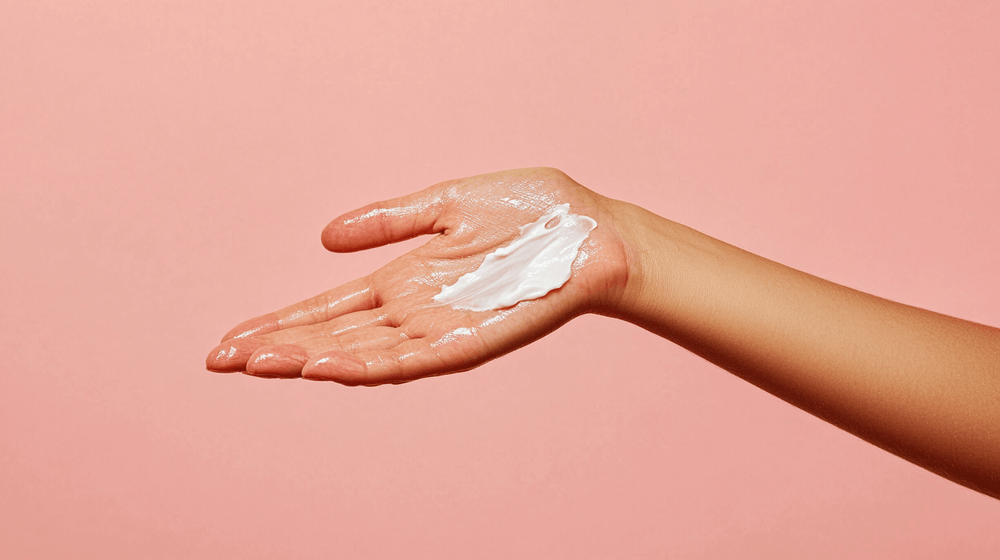
Ženska nežno nanaša vlažilno kremo na kožo podlakti.

VODIČ ZA VSAKODNEVNO NEGO

Skincare for Atopic Dermatitis: An Everyday Routine

Your skin looks calmer today. But is this the moment when you can put your routine on hold?

· 8 min read

With atopic dermatitis, calmer periods are part of the story that we talk about far too little. During these times, a regular, simple routine still helps keep the skin moisturized, soft and protected.

How to care for skin with atopic dermatitis?

Wash your skin briefly with lukewarm water and a gentle cleanser. After washing, apply an unscented cream or ointment to skin that is still slightly damp, and repeat the care when the skin becomes dry. Keep up the routine even during calmer periods.

Important distinction: cosmetic care helps moisturize, soften and protect the skin, but it does not treat atopic dermatitis. Treatment, when needed, is guided by a doctor.

You may know this rhythm well: for a few days your skin is unsettled, then it calms down, only to remind you of itself again when the weather changes, after a shower or in the middle of the night. The problem is not only what we can see. Itching can affect sleep, concentration, clothing choices and perfectly ordinary plans for the day.

The theme of World Atopic Dermatitis Day 2026 is #BreakTheInvisibleBurden — let’s break the invisible burden. The purpose of September 14 is not to talk about skin for just one day. The aim is to better understand what it is like to live with it even when nothing seems unusual on the outside.

What is atopic dermatitis and what happens in the skin?

Atopic dermatitis is a long-term inflammatory disease involving the skin barrier, the immune response, genetic factors and environmental factors. It is not contagious. Nor is it evidence of poor hygiene, and it cannot simply be reduced to one food, one detergent or one mistake in your routine.

Its course is not the same for everyone. The skin may be very dry, itchy and sensitive, while periods of worsening may alternate with calmer periods. Precisely because it can vary, it is more useful to observe your own skin than to chase a universal routine that is supposed to suit everyone.

If you’re looking for a broader explanation of the causes and symptoms, read our basic guide What is atopic dermatitis?. In this article, we focus on practical everyday skin care.

Why is care important even when there is no flare-up?

You can think of the skin barrier as a carefully constructed outer layer that helps retain moisture and separates the skin from the environment. With atopic dermatitis, this protective function may be weakened. Water escapes more quickly, and the skin is more prone to dryness and irritation.

Simplified illustration of the outer layer of the skin with cells, lipids between them, and moisture.

When the protective layer is weakened

The skin may lose moisture more quickly and feel dry, rough, or tight.

What supports daily care

Gentle cleansing and regular use of a suitable moisturizer help keep the skin soft and reduce moisture loss.

This is why moisturizing care is not intended only for the day when your skin is most unsettled. A routine during a calmer period is not dramatic. It is a repeatable step that helps your skin retain what it needs every day: moisture, softness, and protection from drying out.

What does the research review say?

A Cochrane review of 77 studies with 6,603 participants showed that using moisturizers for eczema generally provided some benefits. At the same time, there was no reliable evidence that one moisturizer was best for everyone. The certainty of the evidence varied by outcome, from very low to high. This supports a sensible, individual choice—not promises of a miracle product.

Read the Cochrane review summary

How do you build a simple routine for atopic skin?

Sensitive skin usually does not need a long shelf of products. It needs a few carefully chosen steps that can be followed without much effort. Start simply and change one thing at a time—this makes it easier to notice what works for you.

Lukewarm water and a short duration

American Academy of Dermatology (AAD) recommends bathing or showering for approximately 5 to 10 minutes with lukewarm, not hot, water. Long soaking and heat can increase the feeling of dryness.

Gentle cleansing

Use a cleansing product where you need it. Avoid harsh rubbing. After washing, gently pat your skin dry with a soft towel.

Moisturize without delay

Apply a moisturizing product while the skin is still slightly damp after washing, and reapply when you feel dryness. Adjust the frequency to your skin and your healthcare professional’s instructions.

Observe your skin’s response

Test a new product on a small area first. For atopic dermatitis, the AAD advises testing it daily on the inside of the arm for 7 to 10 days. Discontinue use if irritation occurs.

If your doctor has prescribed treatment, do not change it because of an article or cosmetic product. Daily care and prescribed therapy have different roles.

Which texture is suitable for atopic skin?

The best texture is often the one that suits your skin’s current feel and that you will actually use. Lotion is lighter and convenient for larger areas. Cream is richer. Ointment leaves a more pronounced protective layer on the skin. For atopic dermatitis, the AAD prefers fragrance-free cream or ointment, but the skin’s response remains individual. Formulas vary within the same category, so always check the ingredients and instructions for the specific product.

Three cosmetic textures: liquid lotion, richer cream, and thick ointment.

Atopic Lotion Fragrance-Free for dry and sensitive skin care

Atopic Lotion Fragrance-Free

For easier daily care of larger areas of dry and sensitive skin. A suitable choice when you want moisturization without added fragrance.

  • 400 ml
  • No added fragrance
Check the lotion
Atopic Cream for richer care of dry and sensitive skin

Atopic Cream

For richer daily care of dry and sensitive facial or body skin. The nourishing texture helps maintain a soft, moisturized feel.

  • For face and body
  • Fragrance-free
Check the cream
Atopic Balm for protective care of dry and sensitive areas

Atopic Balm

For thicker protective care of selected areas. The ointment leaves a protective film on the skin and contains calamine.

  • 20% calamine
  • Fragrance- and essential-oil-free
Check the ointment

You don’t need to buy all three. Choose a texture for a clear reason. If your main goal is daily moisturizing of larger areas, start with the lotion or cream. Choose the thicker ointment for areas where you want a more pronounced protective film. Before using each product, read the full INCI and instructions.

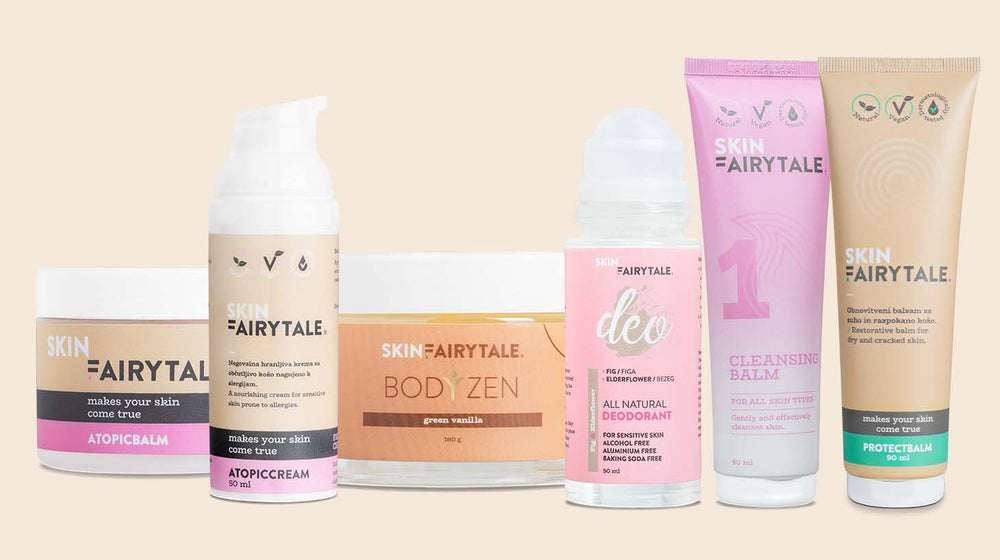
For easier comparison, view the full selection of SkinFairytale therapeutic cosmetics. The line name describes its purpose within the range; the products on this page are cosmetic products for supportive care of dry and sensitive skin and are not medicines.

When is it time to see a doctor for atopic dermatitis?

If the problems continue to worsen, if itching seriously disrupts your sleep or daily life, if your skin hurts, changes rapidly, or shows signs of infection, it is time to consult a doctor. Also seek professional help if you are unsure whether it really is atopic dermatitis.

A routine doesn’t need to be perfect. It needs enough gentleness for your skin to accept it and enough simplicity for you to repeat it. If a product stings, irritates, or worsens your skin, stop using it. Even the label “dermatologically tested” does not mean that a product cannot cause an individual reaction.
Skin doesn’t need guilt. It needs observation, patience, and care with a clear purpose.

On World Atopic Dermatitis Day, I would first like to say this: what others cannot see is real too. And even a small, consistent routine can be an important part of everyday life.

Katarina and the SkinFairytale team

Frequently asked questions

Is moisturising care also important when the skin is calmer?

Yes. For skin prone to atopic dermatitis, regular moisturising care is part of everyday support for the skin barrier. It helps maintain the skin’s moisture and softness, but does not treat the disease itself.

How often is it advisable to moisturise atopic skin?

Apply a moisturising product after washing, while the skin is still slightly damp, and again when dryness appears. There is no single frequency that suits everyone: adjust it according to your skin’s response, the product instructions and the advice of a healthcare professional.

Is lotion, cream or ointment better for atopic skin?

It depends on the area, the degree of dryness and which texture you can use regularly. Lotion is lighter for larger areas, cream is richer, while ointment leaves a more pronounced protective film. Professional recommendations for atopic dermatitis often favour a fragrance-free cream or ointment.

What does it mean for a product to be dermatologically tested?

It means that the product was tested under dermatological supervision according to a specific protocol. The term alone does not indicate what the protocol or result was, and does not guarantee that the product will suit every skin type. Therefore, we do not equate it with proven efficacy against atopic dermatitis or with the absence of a possible reaction.

Does every product for atopic skin have to be fragrance-free?

Fragrances can be problematic for some people, which is why professional recommendations often favour fragrance-free products. Not all products in the SkinFairytale therapeutic line are automatically fragrance-free. Check the claims and INCI list for each specific product.

Can cosmetic care replace treatment?

No. Cosmetic products are intended to cleanse, moisturise, soften and protect the skin. The diagnosis and treatment of atopic dermatitis are managed by a doctor. Do not change prescribed treatment without consulting one.

Sources and further reading

  1. European Federation of Allergy and Airways Diseases Patients’ Associations: World Atopic Eczema Day 2026.
  2. Global, regional, and national burden of asthma and atopic dermatitis, 1990–2021; The Lancet Respiratory Medicine, 2025.
  3. Cochrane: Emollients and moisturisers for eczema. The review includes studies published through December 2015.
  4. American Academy of Dermatology: Atopic dermatitis skin care.
  5. American Academy of Dermatology: Clinical guidelines for atopic dermatitis.
  6. American Academy of Dermatology: Atopic dermatitis symptoms and possible complications.

Important: the content is for general informational purposes and is not intended for self-diagnosis or as a substitute for medical advice. SkinFairytale products presented in the article are cosmetic products for skin care and are not medicines.

Explore the collections: