Posted by Andraz Radovan
on September 09, 2025
In this article: we explain why oils and butters alone aren't enough to provide lasting hydration, how humectants work, and how to layer products to keep dry skin soft and comfortable for the long term. We've also added a handy FAQ.
Table of contents
Quick: Key points
- Oils and butters protect and soften, they don't add water.
- Humectants bind water to the skin, e.g. glycerin, hyaluronic acid, urea.
- First moisturize with lotion or serum, then oil or butter to lock in moisture.
- Ceramides and cholesterol, added below, also help with the barrier .
Introduction
Oils and butters are great for dry skin, but they are not enough on their own to provide long-term hydration. Vegetable oils and butters create a protective layer and prevent moisture loss, but they do not add water to the skin. If we want dry skin to be truly moisturized and not just lubricated, we need to combine moisturizing ingredients, humectants, and nourishing fats in the right care routine.
Introduction: Dry skin manifests itself as tightness, roughness, or even peeling. You may have noticed that your skin becomes uncomfortably dry after a shower or in cold weather, which is why many people intuitively reach for natural oils or butters (e.g. olive oil, coconut oil, shea butter). These rich oils initially soothe the skin from the feeling of dryness, but the question often arises - are oils and butters really enough to eliminate dry skin and restore its softness? Below, we explain what role oils play compared to moisturizers, lotions, and how to most effectively care for dry skin to make it soft and comfortable again.

The difference between oils, butters and humectants
When caring for dry skin, it's important to understand that "moisturizing" your skin is not the same as "lubricating" your skin. Oils and butters, and these moisturizers, have different functions that complement each other. Here's how they work:
Oils and butters, skin nutrients and protectors, not moisturizers
Vegetable oils, e.g. almond, jojoba, olive, and butters, e.g. shea, cocoa, are considered emollients and occlusives in cosmetics. What does this mean? Emollients are substances that soften and nourish the skin , fill the micro gaps between the cells in the epidermis and thus make the skin pleasantly smooth. Occlusives create a protective film on the skin, which reduces the evaporation of water from the skin. Imagine an occlusive as a transparent cover on the skin, preventing valuable moisture from evaporating into the air.
Oils and butters therefore act primarily as protectors against moisture loss . When applied to the skin, they trap moisture inside, which is very important for dry skin that lacks natural fats. At the same time, oils and butters provide the skin with nutrients (e.g. vitamins, essential fatty acids) and make it more supple to the touch. After using a quality butter, the skin is usually softer and less cracked , as the lipid components strengthen the skin barrier .
However, the key is that if there is not enough moisture, water, in the skin itself , then the oil layer has nothing to trap and hold . Oil itself does not moisturize in the sense of adding water, no matter how oily the skin is, a feeling of tightness may remain under this layer if the skin is deeply “thirsty”. Oils and butters cannot moisturize dehydrated skin , but they can effectively prevent further drying. Therefore, they are indispensable as a second step in care, but not as a standalone solution when dealing with severe dryness.
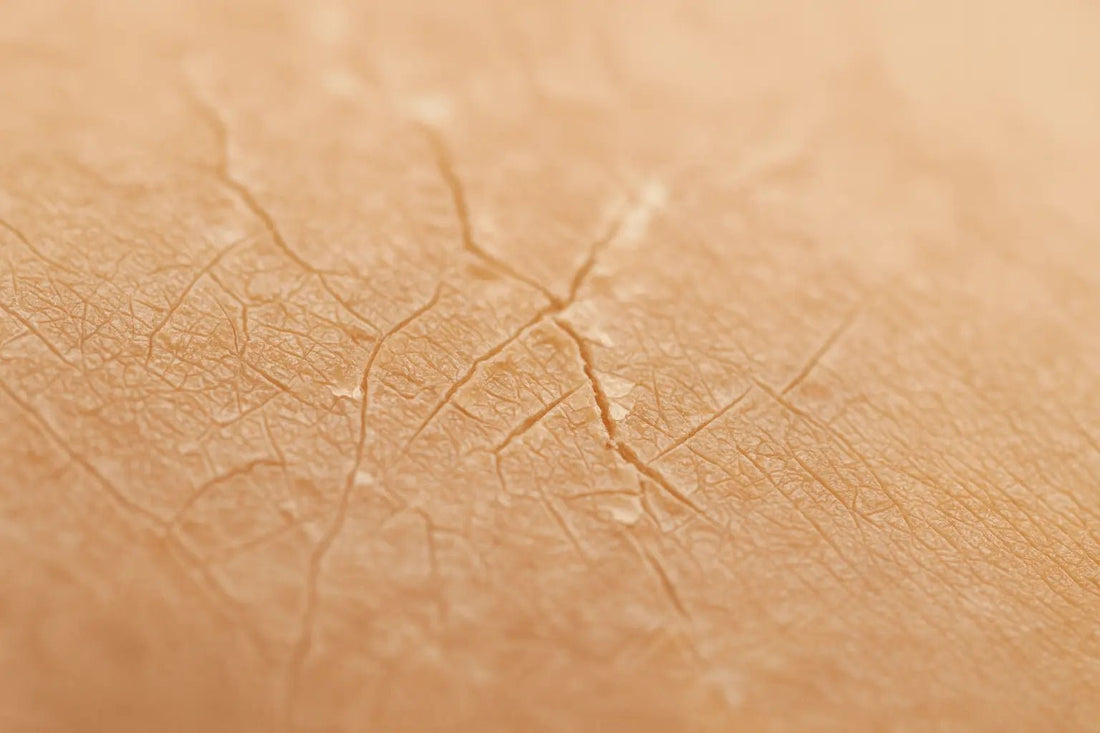
To illustrate: think of a dry crack in the ground, if you pour oil on it, you will prevent further evaporation, but you will not fill the crack with moisture. However, if you first pour water and then coat it with oil, you retain the water inside, the ground becomes moistened and remains moist for a longer period of time. The same applies to skin.
Moisturizers, humectants, “magnets” for water in the skin
Moisturizers, also called humectants , are ingredients that attract and retain water in the skin. They act like little moisture magnets , binding water molecules from the environment or deeper layers of the skin and “pulling” them into the upper layers of the epidermis. Common humectants include glycerin , hyaluronic acid , aloe vera , urea, honey , and natural sugars. When we apply a product rich in humectants, such as a hydrating serum or lotion, this product will add moisture to the skin , the epidermis fills with water, the cells “puff up,” and the skin appears firmer, less flaky, and the uncomfortable feeling of tightness is relieved.
It is important to know, however, that humectants alone cannot lock this added water into the skin . If the skin is not protected with an emollient-occlusive layer after applying a moisturizing serum or lotion, some of the moisture gained can quickly be lost to dry air. Especially in dry or cold environments, an unaccompanied humectant can even pull water from the deeper layers of the skin and then evaporate it, which paradoxically causes even greater dryness on the surface. Therefore, it is recommended that humectants are always combined with oils or butters , the first group supplying moisture, while the second ensures that moisture remains in the skin.
For dry, dehydrated skin, it is therefore an ideal combination of both worlds: moisturizing ingredients that hydrate the skin from the inside out , and nourishing oil ingredients that build a protective layer on the outside. Below, we examine how to put this principle into practice in everyday care.
How to properly moisturize dry skin, a dual approach
Once we understand the difference between “moisturizing,” adding water, and “oiling,” adding oils, we can really help dry skin with the right routine. Properly moisturizing dry skin is a two-step process: first, we provide moisture, then we lock that moisture in with a protective layer. This two-step approach prevents skin from becoming temporarily hydrated, providing long-lasting hydration and protection against dryness.
Why two steps? Dry skin is usually lacking in both water and oils . Applying just a moisturizer without an oil-based protection can cause moisture to be lost more quickly. Applying just an oil to dry, dehydrated skin will retain some moisture, but it won't hydrate the skin, and the feeling of tightness may soon return. Therefore, a combination of moisturizing lotion + oil balm or butter best mimics naturally healthy skin, which has a balanced content of both water and lipids.
Two key steps of a moisturizing routine
-
Apply moisturizer to clean, slightly damp skin. After washing or showering, gently pat your skin dry to leave it slightly damp. Then immediately apply a moisturizing lotion or cream with rich humectants. A moisturizer will hydrate the epidermis , absorb quickly, and deliver the necessary moisturizing ingredients to the skin, such as glycerin, hyaluronic acid, aloe vera. Slightly damp skin when applied helps the humectants to bind water better.
-
After a few minutes, apply another layer of oil, butter or cream. When the lotion is almost absorbed and the skin is still a little dewy, continue by applying oil or rich butter . This step will create a protective layer that locks moisture into the skin . The oil layer prevents the water you added in the first step from evaporating too quickly. At the same time, it will nourish the skin with lipids that strengthen the barrier and give a feeling of softness.
From a practical point of view , such layering can be done with different products. Many modern creams already combine humectants, emollients and occlusives. However, for very dry skin, you often achieve a better effect if you apply the lotion and oil separately , because you can adjust the amount and ratio as needed. In the warmer months, a thinner oil layer, in the winter a richer butter.
Tip: Always listen to your skin . If it feels dry again after a few minutes of lotion, add oil. If oil alone doesn't help with the flakes, introduce a moisturizing serum underneath. With some experimentation, you'll find the right balance.

What to choose for daily care of dry skin
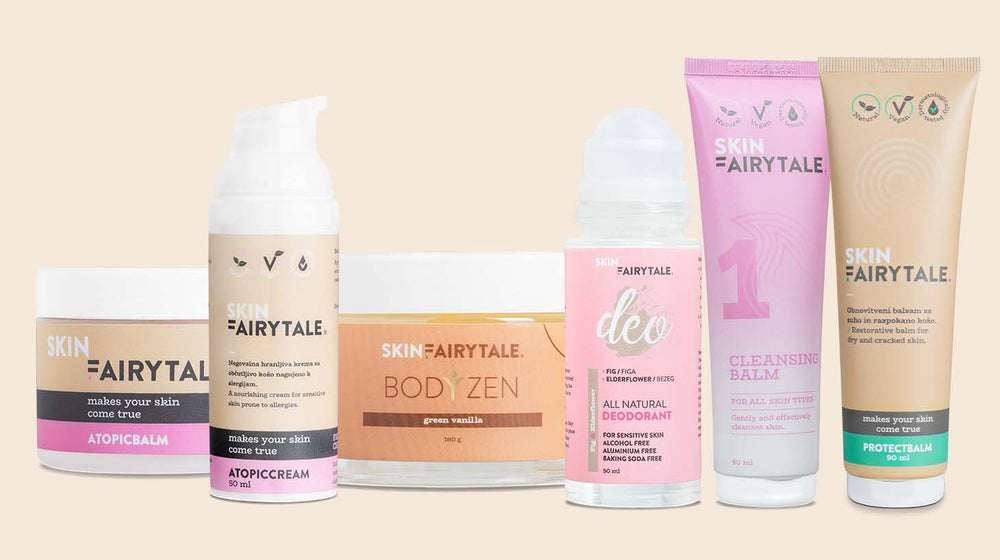
At SkinFairytale, we have developed products specifically for sensitive, dry and atopic skin. The key to success is to combine moisturizing and nourishing elements in your routine, as described above. Here we present three types of products and how to incorporate them into your daily dry skin care routine:
Moisturizing lotion, Atopic Lotion
Atopic Lotion is a gentle yet effective emulsion that provides the skin with much-needed moisture:
- It contains rich moisturizing ingredients , such as glycerin, niacinamide, panthenol, which intensely hydrate the epidermis.
- The light, non-greasy texture is quickly absorbed and does not leave a greasy feeling .
- The formulation is also suitable for sensitive and atopy-prone skin , hypoallergenic, free of fragrances and essential oils.
Atopic Lotion is a great everyday base . For very dry skin, combine it with a richer product to lock in moisture. Use morning and evening wherever you feel dryness.
Protect Balm
Protect Balm is a thick ointment based on natural oils and butters to protect and regenerate dry, cracked skin :
- A high proportion of occlusive ingredients forms a protective layer that prevents moisture loss into the air.
- Soothes irritated, dry skin and reduces roughness.
- Great for targeted care of the driest areas, hands, elbows, feet, lips.
It shows the best results as a second step , over a moisturizing lotion . For overnight renewal, you can apply a thicker layer and wear cotton gloves or socks.
Nourishing body butters, Body Licious , Body Zen , Body Escape
Shea and cocoa butters, enriched with moisturizers, e.g. vegetable glycerin, aloe. They deeply nourish the skin and at the same time lightly moisturize it. Use them daily after showering, and for extra dry areas, layer, lotion, butter, and finish with a layer of Protect Balm if necessary.
Oils and butters are therefore an indispensable part of dry skin care, but they are not a miracle solution for chronic dryness on their own . They help retain moisture and restore the lipid barrier, but they cannot replace the missing water in the skin. For long-lasting moisturized, soft and healthy skin, the best strategy is to layer care , first a moisturizer , then a nourishing product . The result is less tightness, less roughness and skin that stays moisturized throughout the day.
Finally, don't forget other measures, drink enough water, avoid very hot water when showering, and use mild, unscented cleansers that don't remove too much of the skin's natural oils.
Try the described routine with our products and see the difference. At SkinFairytale, we believe in the combination of natural moisturizers and nutrients, which is why we have developed Atopic Lotion , Protect Balm and Body Butter, which complement each other in the care of dry and sensitive skin. If you have any questions about dry skin care, write to us, we are happy to help.
Supplementation, ceramides and cholesterol, why they are important
The skin barrier is made up of lipids, ceramides, cholesterol and free fatty acids. In dry skin, this “mortar” is sometimes lacking. Products with ceramides and cholesterol help restore the barrier. If you are choosing a moisturizer for your body or face, it is a great added value if it also contains ceramides and cholesterol in addition to humectants.
Addition, acne or porous skin and oils
If you have a tendency to clog pores, avoid comedogenic oils, e.g. coconut, and instead reach for lighter ones, e.g. jojoba, squalane, hemp. Always test on a small area. The rule of layering also applies to acne, first moisturizing, then a thin protective layer of non-comedogenic oil.
Supplement, children and very sensitive skin
For children, choose products that are fragrance-free, free of essential oils, and with lower concentrations of urea, around 2 to 5%. Coarse mechanical scrubs are not suitable. In cold months, additionally protect exposed areas with ointment before going outside.
Frequently asked questions, FAQ
Can oil alone cure dry skin?
No. Oil retains existing moisture, but does not add water. Humectant first, then oil or butter.
Why does my skin sometimes itch after applying butter?
Butter seals a dry layer without water, so apply a moisturizing lotion or serum first.
What else helps with dry skin?
Lukewarm water, gentle, sulfate-free cleansers, a humidifier during the heating season, regular use of lotion and a protective layer.
Legal notice
The information in this article is for informational purposes only and is not a substitute for professional medical advice. For persistent dry skin problems, consult a dermatologist. The products mentioned are cosmetic products for supportive skin care, not medicines.